A VOW SO BOLD AND DEADLY Review: Cursebreak and Heartbreak and a Smashing Finale

“Had I known you were my brother,” he says, his voice rough and trembling, “I would have forced you to leave on the very first day of her curse.”

I shake my head. “Had I known you were my brother, I would have stayed by your side just the same.”

Brigid Kemmerer, A VOW SO BOLD AND DEADLY
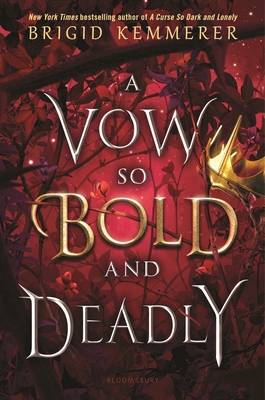
Is there any feeling so simultaneously filled with excitement and despair as beginning the final book in a series that you really love? Finally, you get to learn how the story ends! But that means the story is ending. After you finish, that’s it. No more new adventures with these characters. (At least in theory. In these days of blockbuster publishing, who knows.)

I love the Cursebreaker series. I flew through A Curse so Dark and Lonely in a single sitting. For a story whose basic bones have been told a gazillion times, I thought it was fresh and intricate and convincing and just fun. (Apparently YA Beauty and the Beast retellings are thing that I gravitate toward? Didn’t plan it that way, but what can you do.) I loved these characters and I wanted them to succeed. ALL of them. Which Kemmerer deliberately sets up as a problem.

The world of Emberfall and Syl Shallow is a world in which four potential rulers wish for peace, but the world itself might not be set up for peace. Kinda like our world. How can they navigate political rifts and potentially permanent rifts with one another? Can Kemmerer stick the landing after spending her entire second novel complicating the heroes from her first?

THE STORY SO FAR

[FROM HERE THERE BE SPOILERS FOR THE WHOLE SERIES. OBVIOUSLY.]

A Curse so Dark and Lonely sets out a particularly bleak Beauty and the Beast remix premise: the enchantress whom spoiled Prince Rhen refused was straight-up deranged and evil, and cursed him to become a deadly monster every few months that would wage terror upon his family and his people. In the interim months, or “season,” his one Royal guard left alive after the first few monster attacks will travel through a portal to a parallel realm to fetch a girl for the prince to woo. If the girl can fall in love with Rhen even after finding out that he’s the monster, then the curse is broken. If not, then monster Rhen probably kills some more people before the curse resets, at which point Rhen and his guard, Grey, return to exactly how they were at the beginning yet the dead remain dead (including Rhen’s entire family). For some reason, the magic portal opens into Washington, D.C. At the start of the novel, Grey accidentally brings back Harper, one of my favorite YA fantasy heroines in quite some time. Harper doesn’t take kindly to learning that she’s trapped in a fantasy kingdom called Emberfall, where the populace is struggling under threat of invasion from a neighboring kingdom called Syl Shallow. From here, it’s Beauty and the Beast, so you can guess how the story goes. But just take my word for it that it goes there very enjoyably, alternating POV between Harper and Rhen — except for a crucial final chapter from the POV of Grey.

A Heart so Fierce and Broken seems to spend most of its time undercutting Harper and Rhen, whom we grew to love in the first novel. We don’t get to spend much time with them, instead alternating POV between Grey and Lia Mara, elder daughter of the vicious queen of Syl Shallow. (While Lia Mara turns out to be an excellent heroine on her own and a worthwhile Harper stand-in, I found Grey a little wooden in this novel. He had more life in the first novel as a foil for Harper or Rhen. But perhaps that was the point–he’s still figuring out who he is away from them.) Turns out Grey is the real heir to the throne of Emberfall, the dead King’s first son with a different enchantress. That means Grey can also wield magic. Both of these facts combined absolutely terrify Rhen, who received the worst of the torture from the enchantress Lillith during Emberfall’s curse. Rhen’s PTSD inspires him to act violently toward his former guard and companion, and Grey becomes a fugitive and ally for Lia Mara, seeking asylum in Syl Shallow. Lia Mara, who wishes for her country to seek peace with Emberfall rather than invading, becomes queen of Syl Shallow by the novel’s end. In a final chapter from Rhen’s POV, we learn that Lillith survived Grey’s supposed death blow at the end of the first novel, and Rhen makes another deal with her: he will fight against Grey to keep his throne, if she will promise not to harm Harper.

THE STORY OF A VOW SO BOLD AND DEADLY

After two novels focusing on our two separate pairs of lovers, it’s time to mix them all together! Vow alternates between Team Emberfall and Team Syl Shallow, focusing on Harper and Rhen POV chapters for a little while before switching over to Grey and Lia Mara, and back again and back again. Neither kingdom is inclined to trust its current ruler: Lia Mara’s subjects don’t believe she’s bloodthirsty enough to rule effectively, and they fear Grey’s magic, while Rhen’s people protest that he isn’t the rightful heir. Moreover, while Grey and Lia Mara seem to have a functioning partnership, Harper’s partnership with Rhen is crumbling. She’s having trouble forgiving him for the way that he tortured Grey in the last novel, and he’s having trouble forgiving himself. Also, Lillith is back to emotionally, mentally, and physically abuse Rhen when no one’s watching. Harper and Rhen finally mend their relationship when Rhen confides in her about his new deal with Lillith, and Rhen agrees to seek peace. Only by then it’s too late: an enraged Lillith brutalizes Rhen and all in the castle, and Harper barely escapes with her life to Syl Shallow, where she begs for Grey’s help. Grey, Lia Mara, and their team do ultimately join in the fight to destroy Lillith…and because I don’t want to spoil everything for you, I’m not going to detail how, but let’s just say I cried. In the end, Rhen agrees to yield the throne to Grey and acts as his advisor.

THE BABBLE

Okie dokie. So. I love these characters, and with the exception of one quibble* (see below) I feel as though this final volume does right by them. Grey comes into his own not only as a leader but as a fleshed-out character in this book. I loved seeing the payoff of the hints that Kemmerer has laid for us all along that while we thought this was a fantasy-romance series about princes and plucky YA heroines–and it was that, sometimes–it was really a story about bromance through shared trauma, and how everyone processes trauma differently, and how blood family and found family can sometimes feel the same because they are literally the same. My gods, gentle reader, when I got to the end and Rhen was a monster again and Kemmerer gave us such a delicious twist on the now-tired Frozen trope and Grey went all “Come back to yourself, brother” I was SCREAMING and WEEPING…ahem. I loved that these two young men spend two whole novels claiming that they aren’t friends when they clearly are, and they clearly care for each other very much. Because of course they do. The glimpses Kemmerer gives us of what they suffered together are horrific. They are Samwise and Frodo and I love them.

In some ways, I found that connection a slight weakness as well as a strength, because so much of the characterization for both Rhen and Grey revolves around each character’s relation to the other. What does one think about the other at any given time, and vice versa? How is he reacting to the other’s actions? Harper and Lia Mara, by contrast, feel like much more fully-rounded characters on their own, Harper in particular. And that’s fine with me! If we’re talking about literature geared toward young people and we have to choose, then by all means, let’s please make sure the female characters are more developed than the male ones after many centuries of, you know, that not happening.

Here’s where we get to my small quibble, though: I thought the PTSD focus and narrative structure wound up being a little unfair to Rhen. I like Rhen and I think he’s the most intriguing character in the series. But after three books, I still feel like there’s a gaping hole where his PTSD experience should be. His trauma response becomes such a plot point in Book 2, when his fear of magic drives him to whip Grey nearly to death, and I think we are supposed to feel sympathetic toward Rhen while also feeling sympathetic toward Grey. But every character gets to talk and have opinions about Rhen’s trauma-inspired response to magic, it seems, except for Rhen himself. I get what the books are doing with structure — Kemmerer can’t suddenly shift into Rhen’s POV in book 2, because that book’s dedicated to Grey and Lia Mara — so I don’t have a good solution to this issue, but still. By the time we’re allowed back into Rhen’s head in book 3, he’s mostly back to worrying about holding his kingdom together, worrying about his relationship with Harper, or, near the novel’s climax, just completely and heartbreakingly broken. I felt like we missed an important step.

Like I said, it’s a quibble that doesn’t take away from my enthusiasm for the series as a whole. I can’t wait to sell this novel and this entire series. I loved it! Now come the days of the king. May they be blessed.

RATING

* * * 1/2

RANDOM BABBLE

  • Okay, I know this is supposed to be about Book 3, not Book 1, and I know there’s room for infinite fandoms in the YA fantasy world so no competition necessary, but having read and written about A Court of Thorns and Roses so recently I couldn’t stop comparing these two Beauty and the Beast adaptations and reflecting on how much better I like A Curse so Dark and Lonely. (And before you all come at me: YES I HAVE KEPT GOING IN THE MAAS SERIES, YES YOU WERE RIGHT IT DOES GET BETTER, YES I CALLED IT WHEN I SAID RHYSAND WAS THE OBVIOUS LOVE INTEREST SETUP, YES I AM ALSO EAGERLY AWAITING A COURT OF SLIVER FLAME.) I thought Kemmerer’s work was tighter, the curse itself made WAY more sense, Lillith’s motivations only sorta made sense and they STILL made more sense than Amarantha’s, and this take on the curse narrowed the focus to only two immediate characters (Rhen and Grey) for us to know and care about while upping the stakes to including an entire kingdom of innocent people. Also, the Beast can be useful! Genius.
  • Also, no beast sex. A plus.
  • But still…just as I was thinking maybe I could re-shelve these in my “younger YA” section, I get to Vow and…sexy times. Had to happen eventually. Preferred these to Maas scenes as well, but that’s just me. Though I couldn’t help it, y’all, I did gigglesnort when the consummation for the second teenage pair mirrored the first by also involving the girl murmuring the guy’s name twice.
  • Also about Curse: lots of places where Harper calls Rhen arrogant. I look forward to going back for many re-reads, but…his behavior never seemed all that arrogant to me? Are we to interpret that as Harper’s unwillingness to trust anyone? Did Kemmerer just throw that in there because it’s required terminology for a YA love interest? Or have my standards for arrogance just been skewed by other YA love interests who truly are insufferable twerps? (See: Cardan. Whom I adore.) Discuss.
  • Didn’t mention Jake or Noah above, but they are a delight. Jake giving Grey a hard time after he emerges from Lia Mara’s bedroom was the absolute best thing. I enjoy these books’ approach to representation: Harper has a disability that doesn’t define her, Jake and Noah are gay and it doesn’t define them. People are who they are.
  • I like the unresolved story with Nakiis, and the implication that the trauma Lillith inflicts can cross species.
  • Okay, one more quibble, this one’s tiny and it’s about Lillith: it would have been nice to get a teeeeny bit more explanation about why Lillith could be hurt sometimes, by some people and creatures, in some places, and why not in/by others. But hey, who am I kidding, I’m a Doctor Who fan. Wibbly wobbly timey wimey, I’ll just accept it and move on.

THE MIDNIGHT HOUR Review: Alternate Magical London for the Steampunk Tween

“Her eyes and heart and head were overfull; the waterfall of images was a wonder, not terrifying, or at least not *just* terrifying. It was a feast, and for all the awfulness of what was happening to her, she knew this was something special she’d take with her for the rest of her life. Which might not be very long if any of the crowd got peckish…”

The Midnight Hour, 2020

Anyone else out there love John Bellairs when they were growing up? I did. I read The House With a Clock in its Walls multiple times, then devoured every other Bellairs title my local library had: The Curse of the Blue Figurine, The Mummy, the Will, and the Crypt, The Trolley to Yesterday, and such. The illustrations in those books were also my introduction to Edward Gorey’s artwork, and I love them for that.

I don’t see Bellairs novels in bookstores or libraries all that often anymore, and that’s too bad, because I haven’t found many newer middle grade books that can match Bellairs’ unique brand of lighthearted gothic mystery. Kate Middleton’s fantastic Greenglass House series comes close, and now The Midnight Hour. In a middle grade market awash in various versions of hidden magical Londons, let’s dive into this new addition, shall we?

the story

The story kicks off just before the stroke of midnight, as Emily Featherhaugh stews upstairs in her bedroom following a heated fight with her mother. Her mother doesn’t fit in with regular society much, and Emily finds her embarrassing. Emily watches a shadowy figure drop off a strange-looking envelope at her house, and soon her mother sets off into the night. When her mother doesn’t return, Emily’s father goes searching for her. When her father doesn’t return, either, Emily goes searching for them both.

[FROM HERE THERE BE SPOILERS. YE HAVE BEEN WARNED.]

Chased by a terrifying and inhuman pursuer, Emily finds her way to the office of the Night Post, which leads her to the Midnight Hour: an alternate realm where London (or a steampunk vision thereof) has been frozen at midnight in the year 1859. Also, it’s populated entirely by magical and mythical creatures, known as the Night Folk, who live in this time pocket as a sanctuary from the Muggles Day Folk. Her father has disappeared into the Night World and her mother has been captured by The Nocturne, one of the three Older Powers who predate all other Night Folk. The Nocturne wants to end the Midnight Hour sanctuary and return to the human world. Emily teams up with a rookie Night World cop (a ghul) named Tarkus to rescue her mom, learning along the way that her mother (1) is a pooka (pucka), (2) was instrumental in creating the Midnight Hour sanctuary and fought The Nocture in the past, and (3) left the Night World to marry a badass member of the Night Post (Emily’s dad) and gave birth to a pooka daughter (Emily herself). Emily must dodge all sorts of dangerous creatures to save her family and the Midnight Hour, and shenanigans ensue.

THE BABBLE

This book is FUN, you guys. And genuinely spooky in places. I opened by talking about John Bellairs because reading the first chapter of The Midnight Hour brought me back to reading his books: an intriguing mystery discovered in the dead of night, suspicion of the supernatural, and adolescent worries. In fact, the first few chapters of this novel are pretty airtight. Great suspense, great action, not to mention the Bear’s manifestation in the Day World is creepy (to the point where I was slightly disappointed to learn that he’s ultimately just a big supernatural bear). I also enjoy the rocky friendship between Emily and Tarkus.

And the Bear isn’t the only terrifying creature here. Many of the Night Folk in the Night World are just ordinary creatures trying to get by, but many of the dark creatures in this world are genuinely dark, which I think plenty of middle grade readers might find refreshing. The whole thing has a very Neil Gaiman vibe –not only did this remind me of his middle grade work like The Graveyard Book (one of my all-time favorites) but it particularly felt like a kid-friendly Neverwhere. A Neverwhere primer, if you will. And that’s fine by me.

If I have an objection to this novel, it’s related to tone. Midnight Hour has two authors, Benjamin Read and Laura Trinder, and as with all writing duos I’m curious to hear how they divided writing labor. I’m especially curious this time because the book blends gothic fantasy writing with, shall we say, Kid Lit Snark Voice. That’s a tricky balance to strike, and the novel doesn’t always blend those two tones seamlessly. Take this paragraph, for instance:

“In the shock of the rhino, she’d missed the building behind them. It loomed, a mix between a tomb and a mansion. It had high arched church windows, a statue-lined path leading up to it, and a giant front door. There was no doubt this was her destination. Great. Not even slightly ominous.”

The Midnight Hour, 2020

See what I mean? Contrast this with the first chapter, which opens with Emily meditating on typical preteen angst about her mother’s inability to understand her and how unfair life is — only to be rudely interrupted by a gothic adventure shortly before midnight. There are places in the novel where smashing these two tones together brilliantly captures the feeling of throwing a modern preteen into a magical version of 1859 London, but to me it occasionally feels a bit jarring or forced.

Lastly, I want to talk about Emily’s “gob,” or her temper. I kinda love that this particular heroine’s quest rides on her having a quick temper. (The Librarian says she has been singled out because she is “difficult,” as is her mother. Ha.) How far we’ve come from girl protagonists in books like The Secret Garden, where the heroine’s entire arc involved our lead learning to control her temper and act more ladylike/civil. Here, it’s not only acceptable, but necessary for Emily to be “difficult.” I’m here for it.

All in all, this is a promising middle grade read. A fun Harry Potter alternative for readers who might find The Bookwanderers too cozy.

RATING

*** out of 4

RANDOM BABBLE

  • I love that the three Older Powers are, eldest to youngest: Music, Art, Language. That detail made my heart sing.
  • It has to be said: I’m not Irish or of (much) Irish descent, but if I was, I might be a little offended by the Irish stereotypes that appear in this novel.
  • Gotta love any final battle sequence that takes place inside the workings of a magical Big Ben. (Not sarcasm, I truly loved it.)
  • As someone fascinated with Puck from A Midsummer Night’s Dream, I geek squealed when the novel casually dropped the detail that pookas generally manifest as a horse, a hound, or a hare. Also, I love that the glass artwork on Emily’s bedroom wall with the three black glass hares comes into play later on with her own shapeshifting form.
  • Is it me, or could Hot Topic just release an entire Midnight Hour-branded line with very little effort?

CHILDREN OF BLOOD AND BONE Review: Basically, Just Go Read this Novel. Right Now.

“You crushed us to build your monarchy on the backs of our blood and bone. Your mistake wasn’t keeping us alive. It was thinking we’d never fight back.”

CHILDREN OF BLOOD AND BONE, Tomi Adeyemi, 2018

Have you read CHILDREN OF BLOOD AND BONE yet? If not, why haven’t you read CHILDREN OF BLOOD AND BONE yet? It’s like a creative cocktail of STAR WARS and BLACK PANTHER and AVATAR: THE LAST AIRBENDER, and also something magically unique unto itself. This novel is a glorious and powerful fantasy work.

Now, if you have the right sort of taste (as in you share my taste), then that description alone should have been all it took to send you scrambling to buy this novel and its sequel from your nearest indie bookstore, preferably a black-owned indie bookstore. But this wouldn’t be much of a blog post if I didn’t write more, so here we go.

THE STORY

Okay. There’s a lot of story here, and I don’t want to spoil too much of it. In the land of Orisha there used to be Maji, people who could wield magic given by the gods. Maji were divided into clans based on the type of magic they wielded (sorta like the nations in A:TLA, only there are lots more clans than nations). But the non-magic kosidán became afraid/jealous/greedy of the maji’s powers, beginning a long war that supposedly ended in a great slaughter of maji called The Raid, which coincided with the retreat of magic and the gods from Orisha. Those of maji blood still exist – and are irrevocably marked by their distinctive white hair – but they have no magic. Over the years the kosidán have become the ruling class and do a textbook job of keeping the maji oppressed to discourage rebellion: maji are referred to by the derogatory slur “maggot,” they are kept in low-wage positions, are punished with unfair taxes, and when they can’t pay those taxes they get forced down the prison pipeline into what is essentially slave labor.

Into this society appear magical artifacts that could restore the link between maji and the gods, thus restoring magic to the maji. A maji girl, Zélie, and her non-magical brother, Tzain, find themselves drawn into a plot to restore magic when Amari, daughter to the ruthless King of Orisha, steals one of the artifacts and runs away. Together the three of them race against time and geography to perform an important ritual needed to restore not just Zélie’s magic, but the magic of every oppressed maji in Orisha. All the while they’re pursued by Inan, Amari’s older brother, who turns out to have some magical abilities of his own. And oh, also Zélie becomes the literal embodiment of Black Girl Magic.

THE BABBLE

What can I say? If you’re looking to read an #OwnVoices book that touches on so many of the issues and emotions behind the Black Lives Matter movement – fear, police brutality, injustice, institutionalized oppression, colorism, proper allyship, economic inequality, and privilege – but also happens to be a damn good adventure fantasy story…this is the book for you. The characters fill archetypes, sure, but they’re also beautifully realized. You will love them by the end, and because Adeyemi writes in rotating first person narrative between three of the main characters, you will love all of them by the end.

Adeyemi walks this tightrope between achingly relevant social commentary and Star Wars-style adventure so expertly, too. At least to this reader’s eyes, YA novels that tackle big issues often tend to just have a character or narration boldly state a political viewpoint (or a straw man position) to save time and get all readers on the same page. Adeyemi never does that, but her point is just as clear. For example, the police brutality and corruption in this novel exist very much within the lived-in, detailed world of Orisha, and that detail makes the parallels to our world feel like a discovery rather than a lecture. Which makes that discovery even more of a punch in the gut. The same with the characters’ viewpoints: these are fully-fleshed characters, so trying on their views as they wrestle with the complex issues at play in a society built on prejudice doesn’t feel like reading a point-counterpoint summary. I know THE HATE U GIVE may always be considered the seminal YA work of the BLM movement, but I’ll be trying my hardest to get this fantasy novel into as many hands as possible as well. I think they both have the same goal, and there is definitely more than enough room for both and more (many more, can we please have more?), but Adeyemi has created the more complex work here.

Do I have any small quibbles? Of course, because I almost always do. Only quibble here is I felt like this novel may have been just as effective with one fewer back-stabbing betrayal, one fewer climax? It’s 544 pages long, after all, so I’d have been just as invested without as many fight scenes. But Adeyemi has written a blockbuster movie in novel form, and most blockbuster movies have a few too many fight scenes, and she knows how to write a fantastic and suspenseful fight scene, so this isn’t much of a complaint.

Read this novel. Just read it. Then give it to all your friends.

RATING

**** out of 4

RANDOM BABBLE

  • No POV chapters for poor Tzain, which is too bad because Tzain’s a wonderful guy.
  • The blackness of Orisha feels so celebratory, rather than feeling like exoticism. One of many reasons why we need to publish more POC authors. (In every genre, but especially in fantasy/sci fi.)
  • Almost too many betrayals go with the almost too many will-they-won’t-they moments, and that’s all I’ll say about that (I’m more than halfway through the second book, CHILDREN OF VIRTUE AND VENGEANCE, and I can confidently say this issue stretches beyond the first book in the series).
  • If Inan’s abilities don’t act as an argument for radical empathy being part of the solution to systematic racism, I don’t know what will. But I’m a theatre kid and book nerd, so of course I’d say that.
  • That moment when Zélie screams, “I am always afraid!” Fuuuuuck.
  • I don’t normally suggest audiobooks over physical books or vice versa, but if you have 17 hours to fill, I highly recommend the audiobook version of this one. Bahni Turpin’s reading is a phenomenal performance that gives new depth to the phrase Black Voices Matter.

Oh, and in case I didn’t make this clear in my review for The Parker Inheritance:

A COURT OF THORNS AND ROSES Review: Beauty and the SortaBeast

Against slavery, against tyranny, I would gladly go to my death, no matter whose freedom I was defending.

A Court of Thorns and Roses, Sarah J. Maas, 2015

After my last post about A Midsummer Night’s Dream, I feel like I’m on a roll with this whole Faerie lore and questionable sex-with-beasts thing, so let’s turn to a story that at least involves fewer issues around consent, shall we?

Sarah J. Maas titles sell like crazy at the bookstore where I work, so I’ve been curious to see what all the fuss is about. This is my first Sarah J. Maas novel and I enjoyed it. I love me some dark fairy tales, and I’m loving the dark faerie revival in YA fantasy. Faeries are clearly the new vampires in YA and I’m here for it — faerie lore feels much more varied and interesting than vampire lore, honestly. (How much can there be to vampire lore? They bite. They fight. They brood. Sometimes they sparkle.) Holly Black is one of my absolute favorite fantasy authors, Melissa Albert is another, and while the Gathering of Faerie books aren’t my favorite of Maggie Stiefvater’s novels (I’m ride or die for Scorpio Races and everything that’s come since, especially The Raven Cycle), they certainly stand head and shoulders above most fantasy books out there. A Court of Thorns and Roses is another fine entry in this genre, as well as a fresh new take on Beauty and the Beast.

And lordy lordy, So. Much. Happens. In this book.

the story

Folks, I just…there is an impressive amount of plot in this novel. So much that by the time I got to the part where most novels would be gearing up for the climactic finale, I was stunned to realize I still had quite a bit of book left to go. (Cue obligatory comparison to Return of the King‘s multiple endings, except that I’m a giant LOTR fan who will argue that each of those endings was dramatically necessary and that, furthermore, the book has even more endings, so really Peter Jackson cut us a break.)

Anyhoo. So. Our heroine is Belle Feyre, and she is a total badass huntress who lives on the edge of town, which lies on the border of Prythian, better known for all intents and purposes as the land of Faerie. In this universe, Faeries once ruled over humans and worked them as laborers before the humans revolted and formed an uneasy treaty many years ago. Feyre spends her days hunting, Katniss-style, to feed and take care of her ungrateful sisters and father. Her family used to be wealthy but times have changed – though she seems to be the only member of the family to have changed with the times.

One day she slays the wrong wolf on a hunt: it’s actually a Faerie warrior in wolf form. Soon that Faerie’s friend, in even bigger Beast form, breaks down her family’s door and steals her away with him to Prythian in retribution. Once in Prythian, she discovers that the Beast is one of the seven High Lords of Faerie, and also Lord of the Spring Court, which is to be her new home. Because this is a Beauty and the Beast adaptation, you know this story. Turns out the Beast/High Lord, name of Tamlin, isn’t all that beastly after all once you get to know him, they fall in love, etc.

[FROM HERE THERE BE SPOILERS. YE HAVE BEEN WARNED.]

But not too many spoilers, because seriously, trying to sum up this whole story would take me all day. Suffice it to say that Tamlin and his court are cursed, including Feyre’s attendant/ally/friend Mrs. Potts Alis; Tamlin needs the love of a human who hates faeries to break the curse; also there’s an evil High Queen of Prythian who loves Tamlin (?!) and that’s why she cursed him, which seems a bit much but whatever; and Feyre has to go through a lot of torture and trials before love can prevail. Oh, and also Feyre meets another hot High Lord who seems obsessed with her, and this one has dark hair instead of blonde hair, so you know there must be a love triangle on the way.

the babble

I love Maas’ lush writing style, her vivid descriptions, and the detailed world she’s created here. And damned if she doesn’t know how to write an action sequence. The lore of her particular brand of Faerie culture sounds fascinating, and I look forward to learning more about it in the rest of the books, which I plan to read at some point.

I also appreciated her twists on traditional fairy tale tropes. The strained family dynamics between Feyre and her sisters and her father were so compelling, like something straight out of the Brothers Grimm. And the “impossible tasks” she must complete once she’s imprisoned Under the Mountain — especially the moment when Lucien’s mother helps her with cleaning the floor — come straight from Rumplestiltskin or an old Baba Yaga tale. It’s delicious storytelling.

Here’s the slight problem: I cared way more about those things than I did about Feyre’s love story with Tamlin — or her budding connection with Rhysand, for that matter. (I’ve had multiple friends look like they’re about to explode from holding in spoilers when I talk about how unconvincing I found Feyre’s soulmate connection to Tamlin and YES I GET IT, GUYS, MAAS IS SETTING UP RHYSAND AS A SECOND LOVE INTEREST.) I would much rather have read more scenes between Feyre and her complicated sister Nesta, or Feyre and Lucien, or Feyre and Alis. Those relationships felt far more compelling to me than her conversations (verbal or physical, *ahem*) with either High Lord. Maybe I’m just getting old and jaded, or maybe it’s that the physical descriptions of Tamlin and Rhysand make them sound like a direct retread of the Rob/Gabriel love triangle from L.J. Smith’s Dark Visions trilogy, which I already read and adored back when I was the right age to believe that true love can bloom just because two people are pretty and because the author tells you it’s blooming. Regardless, while I care about both Feyre and Tamlin in their own right and I’m glad they’re happy (for now?), I don’t feel Maas gave them enough scenes to let their relationship grow naturally.

Also, could it be? Yes it could! A Court of Thorns and Roses brings us to this blog’s first encounter with the YA Green Eyed Love Interest phenomenon, in which YA love interests (usually male, sometimes female) disproportionately have green eyes. Which means this novel receives Bookshelves and Babble’s inaugural Green Eye Eye Roll:

rating

***ish out of 4, but mostly because this blog is public and I don’t want hordes of Maas fans to descend upon me

random babble

  • The scene where Feyre kills that giant worm monster is harrowing and excellently plotted. Feyre is such a badass.
  • I love that Feyre’s name plays on both “faerie” and “fair,” as in beautiful. Well done, Maas.
  • Anyone else out there a Feyre/Lucien shipper, or is it just me? Lucien is the best. More Lucien, please.
  • The structure of this story felt a little…lopsided. The first half or so took its time and was so rich in character development and detail, while the second half felt like a great rush of plot reveals and explanations. And not to be a grouch, but Amarantha’s curse on the Spring Court is oddly and conveniently specific…almost as if it was custom-tailored to suit Feyre and get us to exactly this point in the book! What are the chances.
  • I enjoyed Feyre’s artistic passions and her love of painting. Art provided a great way for Maas to show us the ways in which Prythian has been good for Feyre: after witnessing how she strangled her talent to take care of her family back home, she can finally allow her art to grow and blossom in the Spring Court.
  • Two facts about Teenage Kristin that might help put my reaction to this novel in perspective: (1) While I still enjoy these stories, I especially loved romantic fanstasy/sci fi when I was in middle school and high school. L.J. Smith was my favorite author at the time. I was all about cross-magical species soulmate stories, so if I were still a teen I would probably think this was the most brilliant book I’d ever read and give it 4 out of 4 stars. Except that (2) Teenage Kristin was also an insufferable, prudish Goody Two-Shoes, so those Feyre/Tamlin sex scenes would have made my skin crawl as a teen, just like similar scenes did when I read Stephen King and such. I’m not about to yuck anyone’s yum and I’m definitely about to date myself here, but I can’t help but remember people in my hometown raising eyebrows because a Christopher Pike YA novel described sex in a single sentence. Feyre and Tamlin get whole paragraphs that tell you exactly where he puts his hands and his mouth and his tongue and the like. It’s steamy AF (literally AF). I think he actually rips her literal bodice in beast form at some point. Damn, y’all. BUT. All that being said, I’m here for this new trend of YA sex scenes modeling very clear consent between both partners. (Though I would argue that their first encounter, after the Fire Night celebration, very much does not model consent and instead perpetuates the harmful stereotype of a woman being turned on after the man doesn’t listen to her saying “no” and continues his advances. The fact that he’s magically transformed by a ritual into beast form doesn’t entirely excuse that. So…a draw, then, on the consent issue?)
  • Along the same lines, dear reader, what are your thoughts on this whole “new adult” marketing label in fiction? Do you have the same mixed feelings about it that I do? I understand not wanting to potentially restrict access by placing more mature YA books in the adult section, but…I didn’t have any trouble walking over to the adult fantasy/science fiction section when I was a kid, did you? I took a class related to this subject last semester in my MLIS program and it’s such a thorny discussion topic. (Points if you got my pun there.)

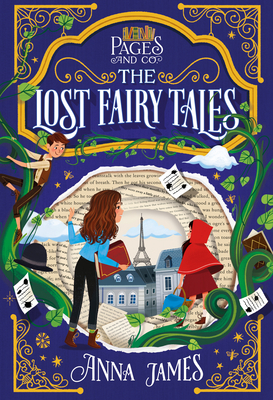
PAGES AND CO.: THE LOST FAIRY TALES: Not as Strong as the First Outing, but Still Plenty to Love

“And what she read came to be all around them, until the bed was like a boat in a river of flowers. They were surrounded by plants of all kinds and colors, both those described in the book and many more besides them.”

The Lost Fairy Tales, Anna James, 2020

Tilly, Oskar, and the Pages family continue their bookwandering adventures in this second installment from Anna James. Like many second books in a series, The Lost Fairy Tales feels like a setup for a proper series, with ongoing animosities and unresolved mysteries and what have you, whereas last year’s The Bookwanderers felt more like a delicious slice of bibliophilic bliss. (Guess it’s probably easier to take chances once your publisher knows that enough people already love your book to keep buying beyond a one-off.) I didn’t feel quite as enamored with this one as I did with the first, but considering just how enamored I felt about the first, that’s not too strong a complaint.

the story

Lost Fairy Tales starts off pretty much where Bookwanderers ended: Tilly’s mother, Bea, is back in the real world after years trapped in a book, while Enoch Chalk has disappeared and the Underlibrary remains in an uproar. Friend of the family and Head Librarian Amelia is forced to resign over the Enoch Chalk scandal, only to be replaced by a man named Melville Underwood. Underwood seems nice, which means he’s probably sinister – as proven shortly thereafter when he bans the Pages from the Underlibrary and attempts (unsuccessfully) to place tracers on Tilly and Oskar.

[FROM HERE THERE BE SPOILERS. YE HAVE BEEN WARNED.]

Back at home, Tilly begins showing signs of rebellious teenagerdom, and Bea continues to struggle with readjusting to her new life. The Pages agree that Tilly should accompany Oskar to spend a few days in Paris with his family over the Christmas holiday. While in Paris, our intrepid heroes break their promise not to bookwander by wandering into books of fairy tales (a notoriously dangerous thing to do) with Oskar’s cool bookwandering grandmother and her mysterious bookwanderer friend, Gretchen. Gretchen happens to have been former partners with Tilly’s grandmother doing research on fairy tales for the British Underlibrary, before they had a mysterious falling out.

Through a series of adventures in fairy tales, Tilly and Oksar discover that someone has begun to collapse fairy tales from the inside, making them even more unstable and dangerous places to wander than before. They also meet a devious set of twins who may be in league with Enoch Chalk. Once again, its up to our favorite young book wanderers to bring the truth to light.

the babble

Just like in the first book, there’s so much to love here. Hats off to James for bringing some political overtones into a book geared toward the middle grade age: maybe it’s just me, but I thought I caught a whiff of Brexit-style nationalism in Underwood’s “British Underlibrary for British bookwanderers” election speech. Not to mention that Underwood clearly rises to power in the Underlibrary by taking advantage of a time filled with panic and promising to crack down on scary outside forces. That’s heavier stuff for the 8-12 age set, and James sprinkles it in without lecturing to her readers or dumbing anything down. (That said, the younger end of the middle grade age range might find the first few chapters, focused on the election and Underlibrary bureaucracy, a bit more boring compared to the last novel? Your mileage may vary.)

There are also plenty of book wandering adventures to savor here – and I might be slightly biased, because this novel involves travel to my two favorite children’s classics growing up, The Secret Garden and The Wind in the Willows. I wasn’t that crazy about The Little Princess or Anne of Green Gables as a kid, so while I delighted in Tilly’s journeys to those books in the first novel, those trips didn’t make me gasp with happiness the way these did. I particularly love the way that Lost Fairy Tales uses The Secret Garden as a way to delicately explore Bea’s depression, just like the garden works for Colin and Archibald in the original story itself. The scene in which Tilly sits reading the book as a “bedtime story” to her mother and pulls Mary’s garden into the room with them, surrounding the bed with flowers, might be my favorite scene from entire series.

Unfortunately, most of the book wandering in this story takes place in disintegrating fairy tales, which results in lots of humorous “fractured fairy tale” scenes. For younger readers encountering this type of thing for the first time, James does a great job, and they’ll probably love it. For me (admittedly not the target audience for this book), having read/watched/been in musical versions of plenty of comedic fairy tale riffs before, I found these parts of the novel less interesting than other book wandering adventures because it felt so familiar to me.

Also less interesting to me were the new Big Bads. Enoch Chalk made for such a great villain, and I’m sorry to see him go, because his motivations were relatable: the guy wanted a life outside of a book that no one had ever read, and he went to extreme lengths to achieve that goal. In comparison, our new Big Bads want book magic for immortality and…world domination, or something? Power in general? The usual stuff, I guess. Way less interesting.

But these are quibbles. I’m still in love with this series and I eagerly await the next book.

rating

*** out of 4

random babble

  • I mentioned it briefly above, but I love how James handles Bea’s depression, her trauma, and her readjustment to life outside of a book. It makes sense that she would be wary of bookwandering and might have a hard time connecting with Tilly, through no fault of her own.
  • Damn, Chalk’s death is horrific. James uses some effective, creepy imagery in that sequence. I also love the moment of character development in which Tilly recognizes that she could bring down Underwood by vouching for Chalk, yet can’t bring herself to help Chalk in any way.
  • I’m so glad James has made Oskar a bookwanderer by lineage, too, and gives him a chance to be excited about it. He deserves to be a bookwanderer in his own right, not just a sidekick.
  • Look, I know the book keeps joking about this as a lame, safe outing for training bookwanderers, but I will gladly go have a picnic on the riverbank with Ratty and Mole from Wind in the Willows anytime. ANY. TIME.

PAGES AND CO.: THE BOOKWANDERERS: Yer a Bookwanderer, Tilly

A bookshop is like a map of the world.

Pages and Co.: The Bookwanderers, Anna James, 2o19

I found it, y’all. I found my new Harry Potter.

Of course, somebody somewhere has labeled every middle grade fantasy series written in the past two decades “the new Harry Potter,” and often that seems like a stretch. Beyond looking at sales numbers, finding that new special series is going to be an individual thing. It’s about feeling.

And that feeling? That bubbly, happy sensation of encountering a fun story about a whimsical, alternate version of our reality in which magic exists? In which you wish you could just lose yourself forever? The same feeling that many people – not everyone, certainly, but lots of us – felt when reading the Harry Potter books for the first time? Reading The Bookwanderers was like that for me. I want to live in this book. Which probably explains why I loved it so much, considering that living in books is the whole point of this book.

the story

The novel follows Tilly Pages, a young girl who lives with her loving grandparents, who live next door to the family’s London bookshop, which sounds like the most wondrously cozy bookshop in the history of ever. (Did I mention I want to live in this book? I want to live in this book. Specifically in said bookshop, Pages & Co.)

Tilly has never known her father, and her mother mysteriously disappeared years ago under circumstances that her grandparents refuse to discuss. So, you know, the usual middle grade fantasy stuff. After Tilly tentatively befriends Oskar, the boy across the street, she notices characters from her favorite children’s books mysteriously appearing in the shop as she reads. She also discovers that she can travel into books with the characters – and she can bring Oskar with her. Eventually, her grandparents reveal that she comes from a long line of “bookwanderers:” essentially, people who read so intensely that they can magically travel into books (or pull characters out of books) while reading them. Tilly’s grandparents take the two children to the British Underlibrary, the large and magical library in charge of monitoring the practice of British bookwandering. Think the Ministry of Magic, except book magic. (The best kind of magic.) Turns out the Pages used to work at the Underlibrary before resigning under mysterious circumstances.

[FROM HERE THERE BE SPOILERS. YE HAVE BEEN WARNED.]

As Tilly and Oskar begin their bookwandering training by visiting various children’s books, they notice a sinister employee of the Underlibrary, Enoch Chalk, stalking them through their various book adventures. With good reason: Tilly turns out to have special bookwandering abilities because…wait for it…she’s half fictional! Her father was a character from a book, and for various reasons that I won’t spoil, Enoch also trapped Tilly’s mother in a copy of A Little Princess. It’s up to Tilly and Oskar to rescue Tilly’s mother and expose Enoch’s treachery.

the babble

Like I said, it’s as though Anna James sat down and thought, “Hmm, like the Harry Potter template…except BOOKS. And a secret society of magical librarians.” Which is 100% relevant to my interests and tastes, so I’m here for it.

This book will satisfy not only young readers, but older readers who enjoy YA books and want to relive their old classic favorites like Anne of Green Gables, Alice and Wonderland, and such through a new lens. One of the novel’s greatest pleasures is watching James capture the feeling of those earlier classics to create brand-new scenes involving our protagonists while they bookwander. So The Bookwanderers is a treat for bibliophiles…and for Anglophiles, too. It is unapologetically BRITISH, like many of the classics it attempts to evoke. (Aside from Oskar and his mum, diversity doesn’t seem to be a big priority for this series.) If that’s not your jam, you may not care for it.

The world building here is exquisite. I love the rules of bookwandering, I love the literalism of the British Underlibrary hovering underneath the British Library (*drool*), I love the varying philosophies on bookwandering and what it means and how to use it. Most of all, I love Pages & Co. itself. Can I please live there?

This isn’t a super deep novel, but not every novel needs to be. It’s deep in the sense that it addresses the sacred connection that many of us feel to certain books, as adults and certainly as children (and for many of us, as adults looking back to when we were children). It is charming, witty, and fast-paced, and it leaves you with a warm glow in your chest. It’s going on my cheer-me-up shelf.

rating

***1/2 out of 4

random babble

  • Did I mention that Pages & Co is multiple stories tall and contains a tea/coffee shop, and that Jack, who seems to be the only employee, sounds delightful? And that it’s in London? Gah.
  • Of all the classic characters James brings in, I think she captures Anne the best, but your mileage may vary.
  • I love Enoch Chalk’s motivation. The discussion of forgotten books is so poignant.
  • Okay, I know I haven’t written a review about this one yet, but has anyone else read this book and also The Starless Sea by Erin Morgenstern (if not, you need to) and noticed that they’re basically the same book in adult and children’s versions, and they came out at similar times? Even down to the important bee symbol. Spooky.

THE HOUSE IN THE CERULEAN SEA Review: The Perfect “Summer Read” for a Summer that Involves June 2020

Don’t you wish you were here?

The House in the Cerulean Sea, T.J. Klune, 2020

Yes. Yes, I do wish I was there, you lovely, sweet book.

But in some ways, I do feel like I’m there already. Because this book deals sensitively with systemic, government-sanctioned oppression and prejudice. It also deals with finding the courage to stand up to said oppression and prejudice, not as a hotheaded and hormone-driven teenager but rather as a kindhearted but unremarkable midlevel bureaucrat. How to turn the system against itself. That might, you know, possibly have more relevance to the current cultural moment than T.J. Klune ever dreamed when he wrote it not long ago.

This isn’t a dystopian novel or an Issue novel, though. Quite the opposite. It’s a romantic comedy and character study, a lovely piece of contemporary fantasy. If you’re like me and adore Good Omens, or grew up loving the Hitchhiker’s Guide to the Galaxy series (but in your old age find the latter a bit too much, if you’re being honest), then reading this book will feel like settling into a wonderfully comfy chair from your past that you’d forgotten you missed.

THE STORY

Linus Baker lives in a version of our world that looks very much like our own, except that magical beings and creatures exist. He’s a caseworker for the Department in Charge of Magical Youth, just one agency in a giant government arm dedicated to registering, isolating, and keeping tabs on magical beings. Linus isn’t a bad person. He genuinely cares about the magical children in the “orphanages” (read: homes, as it’s pointed out that none of the children are actually up for adoption) that he inspects for work. He just happens to be a cog in a system so large that he can’t get a birds-eye view, and has to trust that the work he does truly helps these children in the long run. (Spoiler alert: it doesn’t.) He is a good-natured, Arthur Dentish-type fellow who lives a quiet, lonely life with a cat for company.

[FROM HERE THERE BE SPOILERS. YE HAVE BEEN WARNED.]

Without warning he receives a special assignment from Extremely Upper Management to investigate a mysterious, isolated home for magical youth. He will leave for a month, effective immediately. When he arrives at the foreboding house on a magic-drenched island, he meets the home’s child tenants: a young Antichrist, a female Gnome, a powerful forest sprite, a wyvern who speaks in a series of squeaks, and a werewolf who transforms into a Pomeranian. He also meets Arthur Parnassus, the master of the “orphanage,” with whom he slowly falls in love and begins a tentative relationship. Over a course of his monthlong stay, the island’s inhabitants welcome him into their home and prove to him that he knows exactly how to make a difference.

“I can have spiders in my head as long as I don’t let them consume me and destroy the world as we know it.”

The House in the Cerulean Sea, T.J. Klune

the babble

Folks, I loved this book. I loved it so much. I think it would be truly difficult to not love this book.

The humor remains light and never falters. The children are undeniably cutesy, but each has his or her own distinct personality. The whole thing has an air of myth or fable about it. It would make a great movie. (But I hope no one actually tries to make it into a movie, because this is one of those stories that would be so, so easy to ruin in the wrong filmmaker’s hands. It’s all about tone.) Linus’ gradual awakening of the soul is a delicate wonder to behold and to experience secondhand.

It is a perfect book? Not quite. Does the uplifting resolution in the last few chapters feel a bit pat? Yes. Did I catch myself thinking more than once about South Park‘s opinions regarding Nice Little Heartfelt Speeches? You betcha. (Linus gives a LOT of Nice Little Heartfelt Speeches toward the end. But in Klune’s defense, they’re pretty good speeches.) Do I care about these quibbles at all? Not really.

The experience of reading this novel feels a lot like Linus’ experience of finding himself on a lovely, magical island. I really, really needed this book right now. You might need it, too.

RATING

***1/2 out of 4

random babble

  • Apparently Klune is American. He must love all the same British authors that I love, then, because he has that distinctly British, dry-humor narrative voice thing down. It’s flawless. Feels like reading Adams, or Pratchett, or Gaiman.
  • The city where Linus lives and works is never identified as London, nor are any country names ever mentioned, but I think it’s safe to assume that this world is set up as an England parallel?
  • One of the best things about this book is that Linus is gay, but it’s not a big deal. It’s just another fact about him. When he and Arthur begin a relationship, the fact that Arthur is another man is a non-issue. Even Linus’ otherwise horrible and nosy neighbor is fine with his sexual orientation. It’s so lovely. We need more books like this.
  • Calliope is a great cat. Cats in British books (or American books masquerading in British style) are the best book cats.