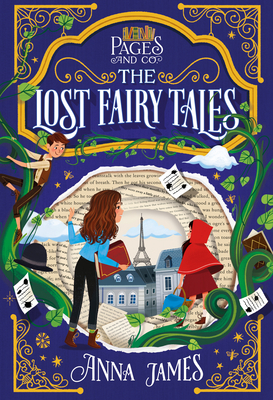
Someone Tell Me, When is it My Turn? THE OTHER BENNET SISTER Review

“In our house, no-one is obliged to sparkle. Which, I find, makes it far more likely that they might.”

Janice Hadlow, THE OTHER BENNET SISTER

Guess maybe I was right about that posting once or twice a month thing because OOF, grad school. Anyhoo…

I fell head over heels for this book, y’all. I really did. I’m a sucker for revisionist fiction, but I’ll admit I did come to this particular novel with some healthy skepticism – if you’re going to come for the well-known and well-beloved characters of Pride and Prejudice, you’d best not miss.

I enjoyed Longbourn a few years ago, but that book felt more like a Rosencrantz and Guildenstern are Dead for Jane Austen fans: the novel’s plot happened tangentially to the main plot of P&P, only occasionally checking in on the famous story to give us the events we all know so well from the servants’ point of view. In The Other Bennet Sister, we’re seeing famous events through the viewpoint of a supporting character from the novel, poor middle child Mary. P&P traces the stories of Jane, Lydia and, of course, Lizzie. This book is Mary’s chance to shine.

THE STORY

I don’t want to spoil too much, so I won’t spend much time on plot summary, but I will mention that I was surprised by how little time The Other Bennet Sister spends on the familiar events of P&P. We open with glimpses of Mary’s childhood, her strained relationship with her appearance-obsessed mother, her increasing isolation from her other sisters, and her developing interest in philosophical study. We then experience the first third or so of the Pride and Prejudice plot through Mary’s yearning for acceptance and constant small humiliations (I will never watch any version of the excruciating scene in which she plays pianoforte and sings at the Netherfield ball the same way again). Shortly after Mr. Collins leaves town, having secured Charlotte Lucas as his wife, we finish retracing P&P and jump way ahead to after Lizzie and Jane have married and settled down with their respective partners.

That’s Part One. In Part Two, Mary has been left living alone with her parents (Kitty also married quickly once the family became rich again) and must figure out what her place will be within her family. With which relative will she settle? To whom will she be the least “burden”? The novel deals sensitively with the bleak realities facing unmarried women even in wealthy families, and deals particularly well with Mary’s sad awkwardness upon revisiting Longbourn, her childhood home, once the Collinses take residence there.

That visit back to Longbourn, and the threat of having to become a governess, inspires a trip to London and Mary’s slow blossoming into a more independent woman away from the stifling judgement of her family. Of course, she finds herself the attention of two suitors. Of course, she finds the happiness she deserves. But she also finds self-respect, which feels just as deserved if not more so.

THE BABBLE

First off, if you’re going to riff on Austen then you need to do justice to Austen’s writing style, and I feel that Hadlow excels here. Hadlow does not try to make a direct imitation, but the voice sounds similar enough that you feel as though you have slipped back into the familiar world of Longbourn, Netherfield, Pemberley, and beyond.

Secondly, I love this novel if for no other reason than it finally gives credence to those of us who have been screaming at Mrs. Bennet for years something along the lines of “WHY ARE YOU SHOVING LIZZIE AT MR. COLLINS WHEN THE ANSWER IS CLEARLY MARY, YOU RIDICULOUS WOMAN!” But it also gives credible motivation for Mrs. Bennet’s actions, so, many thanks to Hadlow for that nod without it feeling like simple fan service. In fact, Hadlow seems to be on a quest here to rebrand two of Austen’s two most-ridiculed characters from the novel, giving depth not only to Mary but to Mr. Collins as well. Mary’s visit back to Longbourn was ultimately one of my favorite sequences of the entire book, rich in meaning and character development, and not just because I’m fascinated by the idea of Longbourn ownership these days. One objection, though: I’ve always been a fan of Charlotte Lucas, and it feels as if Hadlow’s vision requires some reworking of Charlotte’s character in a way that isn’t entirely flattering. I love the idea of Charlotte seeing Mary early on as a kindred spirit and similar “at-risk” young woman, and taking her under wing with pragmatic advice. But later her pragmatism comes across as coldness, heartbreaking to both Mary and Mr. Collins, and also to me. Charlotte may not be romantic, but she’s also never struck me as blunt to the point of being cruel.

I do love that the Gardiners once again come to the rescue of a Bennet sister, and this time truly help her to blossom and grow into a woman. The Gardiners don’t just offer Mary a chance to escape her family, they offer her a chance to escape her old self. And the fact that Mary, not Lizzie, winds up taking that long-awaited trip to the Lake District with her Aunt and Uncle feels exactly right. She is finally learning to appreciate poetry, after all. Lizzie didn’t need the Lakes. Mary does.

Much as I enjoyed watching Mary come into her own once the Gardiners adopted her into their family unit, I found the London third of the book the least interesting, if I’m being honest. Perhaps because it felt like dropping back into romantic comedy conventions after a heartfelt exploration of 18th-century womanhood and marriage? Or perhaps because I could see where this part of the story was headed from a mile a way.

But who cares? I loved it all. I dub this new required reading for any diehard Austen fan. So go forth, and read!

RATING:

* * * 1/2

RANDOM BABBLE:

  • One ridiculed Austen character whom Hadlow doesn’t seem interested in revising: Lady Catherine de Bourgh. She’s as delightfully abominable as ever. Never change, Lady C.
  • Points for callbacks to Mr. Collins’ gardening.
  • Hill is still the best, forever and ever. What that woman has seen/put up with, I swear…
  • The parallels to P&P plot structure at the very end might have either annoyed me or charmed me. They charmed me, because they were just different enough to be callbacks rather than hitting me over the head. (So, like, clearly not written by J.J. Abrams. For example.)
  • Okay, one other quibble about Charlotte revisions then I’ll shut up about it: the book implies that Charlotte and Lizzie’s friendship never quite recovers from Charlotte’s announcement of her engagement to Mr. Collins. But wouldn’t that…significantly mess with the plot of P&P? Maybe I’m overthinking it.
  • I like the subtle work that Hadlow does on the relationship between Mary and Lizzie, and the ups and downs of sisterly affection.
  • I’m glad we got a brief glimpse of Spectacles Boy at the end. He was so nice! My heart broke for both of them at the beginning.

And for real, here’s how I want to see Charlotte and Lizzie forever:

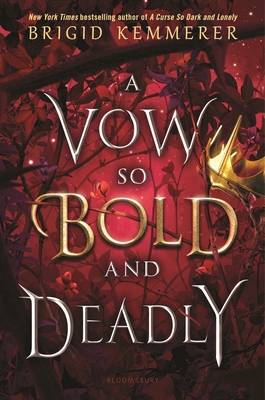
A VOW SO BOLD AND DEADLY Review: Cursebreak and Heartbreak and a Smashing Finale

“Had I known you were my brother,” he says, his voice rough and trembling, “I would have forced you to leave on the very first day of her curse.”

I shake my head. “Had I known you were my brother, I would have stayed by your side just the same.”

Brigid Kemmerer, A VOW SO BOLD AND DEADLY

Is there any feeling so simultaneously filled with excitement and despair as beginning the final book in a series that you really love? Finally, you get to learn how the story ends! But that means the story is ending. After you finish, that’s it. No more new adventures with these characters. (At least in theory. In these days of blockbuster publishing, who knows.)

I love the Cursebreaker series. I flew through A Curse so Dark and Lonely in a single sitting. For a story whose basic bones have been told a gazillion times, I thought it was fresh and intricate and convincing and just fun. (Apparently YA Beauty and the Beast retellings are thing that I gravitate toward? Didn’t plan it that way, but what can you do.) I loved these characters and I wanted them to succeed. ALL of them. Which Kemmerer deliberately sets up as a problem.

The world of Emberfall and Syl Shallow is a world in which four potential rulers wish for peace, but the world itself might not be set up for peace. Kinda like our world. How can they navigate political rifts and potentially permanent rifts with one another? Can Kemmerer stick the landing after spending her entire second novel complicating the heroes from her first?

THE STORY SO FAR

[FROM HERE THERE BE SPOILERS FOR THE WHOLE SERIES. OBVIOUSLY.]

A Curse so Dark and Lonely sets out a particularly bleak Beauty and the Beast remix premise: the enchantress whom spoiled Prince Rhen refused was straight-up deranged and evil, and cursed him to become a deadly monster every few months that would wage terror upon his family and his people. In the interim months, or “season,” his one Royal guard left alive after the first few monster attacks will travel through a portal to a parallel realm to fetch a girl for the prince to woo. If the girl can fall in love with Rhen even after finding out that he’s the monster, then the curse is broken. If not, then monster Rhen probably kills some more people before the curse resets, at which point Rhen and his guard, Grey, return to exactly how they were at the beginning yet the dead remain dead (including Rhen’s entire family). For some reason, the magic portal opens into Washington, D.C. At the start of the novel, Grey accidentally brings back Harper, one of my favorite YA fantasy heroines in quite some time. Harper doesn’t take kindly to learning that she’s trapped in a fantasy kingdom called Emberfall, where the populace is struggling under threat of invasion from a neighboring kingdom called Syl Shallow. From here, it’s Beauty and the Beast, so you can guess how the story goes. But just take my word for it that it goes there very enjoyably, alternating POV between Harper and Rhen — except for a crucial final chapter from the POV of Grey.

A Heart so Fierce and Broken seems to spend most of its time undercutting Harper and Rhen, whom we grew to love in the first novel. We don’t get to spend much time with them, instead alternating POV between Grey and Lia Mara, elder daughter of the vicious queen of Syl Shallow. (While Lia Mara turns out to be an excellent heroine on her own and a worthwhile Harper stand-in, I found Grey a little wooden in this novel. He had more life in the first novel as a foil for Harper or Rhen. But perhaps that was the point–he’s still figuring out who he is away from them.) Turns out Grey is the real heir to the throne of Emberfall, the dead King’s first son with a different enchantress. That means Grey can also wield magic. Both of these facts combined absolutely terrify Rhen, who received the worst of the torture from the enchantress Lillith during Emberfall’s curse. Rhen’s PTSD inspires him to act violently toward his former guard and companion, and Grey becomes a fugitive and ally for Lia Mara, seeking asylum in Syl Shallow. Lia Mara, who wishes for her country to seek peace with Emberfall rather than invading, becomes queen of Syl Shallow by the novel’s end. In a final chapter from Rhen’s POV, we learn that Lillith survived Grey’s supposed death blow at the end of the first novel, and Rhen makes another deal with her: he will fight against Grey to keep his throne, if she will promise not to harm Harper.

THE STORY OF A VOW SO BOLD AND DEADLY

After two novels focusing on our two separate pairs of lovers, it’s time to mix them all together! Vow alternates between Team Emberfall and Team Syl Shallow, focusing on Harper and Rhen POV chapters for a little while before switching over to Grey and Lia Mara, and back again and back again. Neither kingdom is inclined to trust its current ruler: Lia Mara’s subjects don’t believe she’s bloodthirsty enough to rule effectively, and they fear Grey’s magic, while Rhen’s people protest that he isn’t the rightful heir. Moreover, while Grey and Lia Mara seem to have a functioning partnership, Harper’s partnership with Rhen is crumbling. She’s having trouble forgiving him for the way that he tortured Grey in the last novel, and he’s having trouble forgiving himself. Also, Lillith is back to emotionally, mentally, and physically abuse Rhen when no one’s watching. Harper and Rhen finally mend their relationship when Rhen confides in her about his new deal with Lillith, and Rhen agrees to seek peace. Only by then it’s too late: an enraged Lillith brutalizes Rhen and all in the castle, and Harper barely escapes with her life to Syl Shallow, where she begs for Grey’s help. Grey, Lia Mara, and their team do ultimately join in the fight to destroy Lillith…and because I don’t want to spoil everything for you, I’m not going to detail how, but let’s just say I cried. In the end, Rhen agrees to yield the throne to Grey and acts as his advisor.

THE BABBLE

Okie dokie. So. I love these characters, and with the exception of one quibble* (see below) I feel as though this final volume does right by them. Grey comes into his own not only as a leader but as a fleshed-out character in this book. I loved seeing the payoff of the hints that Kemmerer has laid for us all along that while we thought this was a fantasy-romance series about princes and plucky YA heroines–and it was that, sometimes–it was really a story about bromance through shared trauma, and how everyone processes trauma differently, and how blood family and found family can sometimes feel the same because they are literally the same. My gods, gentle reader, when I got to the end and Rhen was a monster again and Kemmerer gave us such a delicious twist on the now-tired Frozen trope and Grey went all “Come back to yourself, brother” I was SCREAMING and WEEPING…ahem. I loved that these two young men spend two whole novels claiming that they aren’t friends when they clearly are, and they clearly care for each other very much. Because of course they do. The glimpses Kemmerer gives us of what they suffered together are horrific. They are Samwise and Frodo and I love them.

In some ways, I found that connection a slight weakness as well as a strength, because so much of the characterization for both Rhen and Grey revolves around each character’s relation to the other. What does one think about the other at any given time, and vice versa? How is he reacting to the other’s actions? Harper and Lia Mara, by contrast, feel like much more fully-rounded characters on their own, Harper in particular. And that’s fine with me! If we’re talking about literature geared toward young people and we have to choose, then by all means, let’s please make sure the female characters are more developed than the male ones after many centuries of, you know, that not happening.

Here’s where we get to my small quibble, though: I thought the PTSD focus and narrative structure wound up being a little unfair to Rhen. I like Rhen and I think he’s the most intriguing character in the series. But after three books, I still feel like there’s a gaping hole where his PTSD experience should be. His trauma response becomes such a plot point in Book 2, when his fear of magic drives him to whip Grey nearly to death, and I think we are supposed to feel sympathetic toward Rhen while also feeling sympathetic toward Grey. But every character gets to talk and have opinions about Rhen’s trauma-inspired response to magic, it seems, except for Rhen himself. I get what the books are doing with structure — Kemmerer can’t suddenly shift into Rhen’s POV in book 2, because that book’s dedicated to Grey and Lia Mara — so I don’t have a good solution to this issue, but still. By the time we’re allowed back into Rhen’s head in book 3, he’s mostly back to worrying about holding his kingdom together, worrying about his relationship with Harper, or, near the novel’s climax, just completely and heartbreakingly broken. I felt like we missed an important step.

Like I said, it’s a quibble that doesn’t take away from my enthusiasm for the series as a whole. I can’t wait to sell this novel and this entire series. I loved it! Now come the days of the king. May they be blessed.

RATING

* * * 1/2

RANDOM BABBLE

  • Okay, I know this is supposed to be about Book 3, not Book 1, and I know there’s room for infinite fandoms in the YA fantasy world so no competition necessary, but having read and written about A Court of Thorns and Roses so recently I couldn’t stop comparing these two Beauty and the Beast adaptations and reflecting on how much better I like A Curse so Dark and Lonely. (And before you all come at me: YES I HAVE KEPT GOING IN THE MAAS SERIES, YES YOU WERE RIGHT IT DOES GET BETTER, YES I CALLED IT WHEN I SAID RHYSAND WAS THE OBVIOUS LOVE INTEREST SETUP, YES I AM ALSO EAGERLY AWAITING A COURT OF SLIVER FLAME.) I thought Kemmerer’s work was tighter, the curse itself made WAY more sense, Lillith’s motivations only sorta made sense and they STILL made more sense than Amarantha’s, and this take on the curse narrowed the focus to only two immediate characters (Rhen and Grey) for us to know and care about while upping the stakes to including an entire kingdom of innocent people. Also, the Beast can be useful! Genius.
  • Also, no beast sex. A plus.
  • But still…just as I was thinking maybe I could re-shelve these in my “younger YA” section, I get to Vow and…sexy times. Had to happen eventually. Preferred these to Maas scenes as well, but that’s just me. Though I couldn’t help it, y’all, I did gigglesnort when the consummation for the second teenage pair mirrored the first by also involving the girl murmuring the guy’s name twice.
  • Also about Curse: lots of places where Harper calls Rhen arrogant. I look forward to going back for many re-reads, but…his behavior never seemed all that arrogant to me? Are we to interpret that as Harper’s unwillingness to trust anyone? Did Kemmerer just throw that in there because it’s required terminology for a YA love interest? Or have my standards for arrogance just been skewed by other YA love interests who truly are insufferable twerps? (See: Cardan. Whom I adore.) Discuss.
  • Didn’t mention Jake or Noah above, but they are a delight. Jake giving Grey a hard time after he emerges from Lia Mara’s bedroom was the absolute best thing. I enjoy these books’ approach to representation: Harper has a disability that doesn’t define her, Jake and Noah are gay and it doesn’t define them. People are who they are.
  • I like the unresolved story with Nakiis, and the implication that the trauma Lillith inflicts can cross species.
  • Okay, one more quibble, this one’s tiny and it’s about Lillith: it would have been nice to get a teeeeny bit more explanation about why Lillith could be hurt sometimes, by some people and creatures, in some places, and why not in/by others. But hey, who am I kidding, I’m a Doctor Who fan. Wibbly wobbly timey wimey, I’ll just accept it and move on.

A New, Beautifully Understated Holiday Fable: A WILD WINTER SWAN

Why does the most obvious thing, the only thing that doesn’t need to be said, hurt so much when it is actually said out loud?

Gregory Maguire, A WILD WINTER SWAN

Hey look, a blog! What is this strange, magical contraption for writing one’s thoughts about books and other topics in long form?

Happy New Year, everyone. After taking a few months away from Bookshelves & Babble to juggle Mom’s passing with finishing up fall semester of grad school, I’m hoping to start writing book reviews here again instead of just lazily posting a few sentences over on Instagram. (Aiming for only once or twice month, though. Because, you know, grad school.)

Before we get too far away from Christmas/New Year’s Eve/Solstice/Winter holidays, I definitely want to share this book with y’all, because I haven’t talked to too many people who’ve read it yet and that’s a shame.

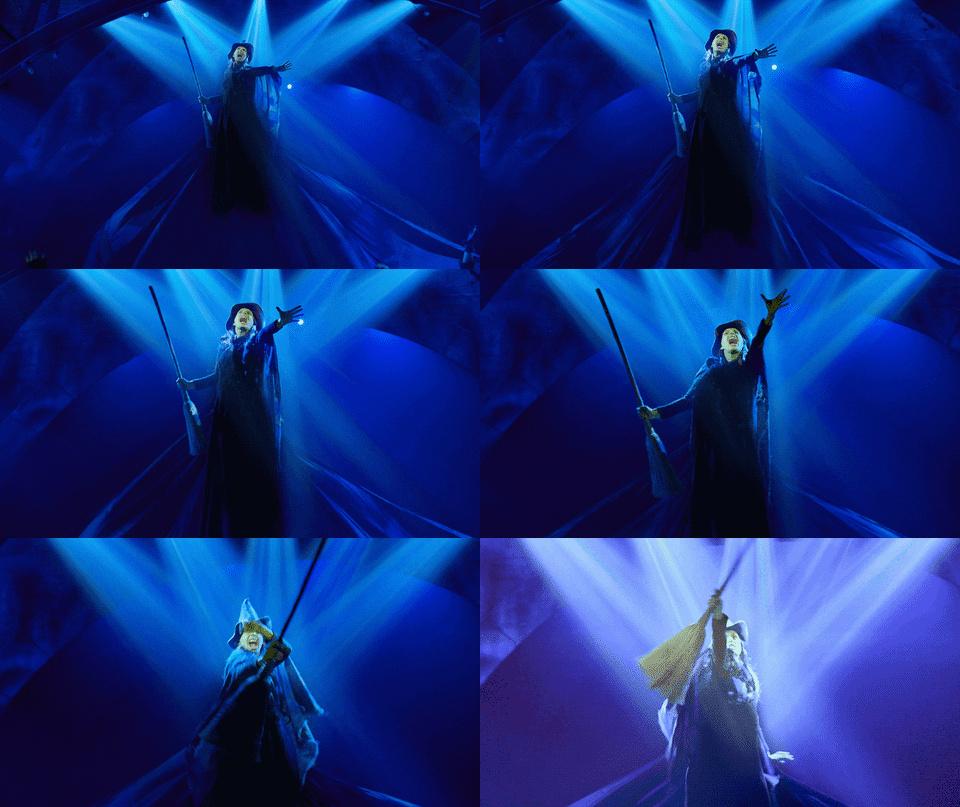
Look, Gregory Maguire has written approximately 5,000 books. Some of them get loosely adapted into juggernaut musicals. He’s got a thing going. You may have read all of them, you may have read none of them, you may have read one and then decided Gregory Maguire’s not your thing. Before picking up A Wild Winter Swan I’d read…two, I think? His novel Wicked completely captivated me the first time I read it, and I’ve read it more than once. I borrowed the first sequel from the library, and wasn’t as big a fan of that one. (How have I never even read Confessions of an Ugly Stepsister? I’m just now realizing that I haven’t.)

Okay, yes, this song is great. But other than that I kinda hate the way the musical waters down, and happy-ends, the novel.

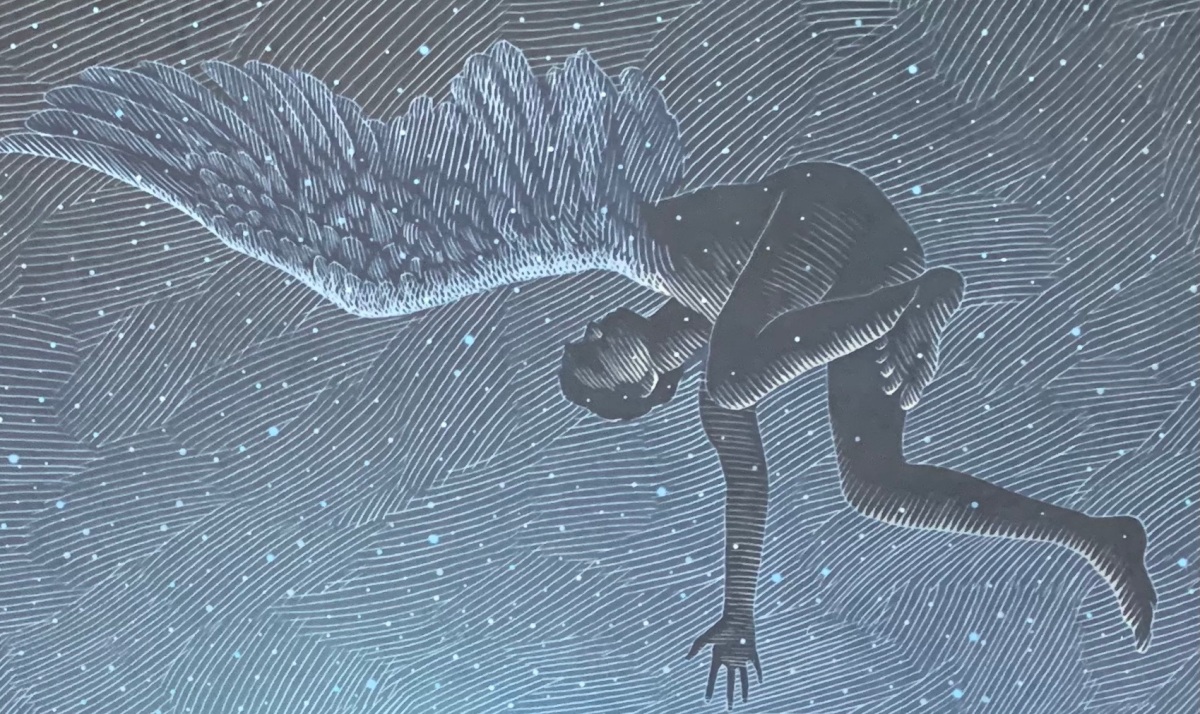
But I kept walking by this new novel in the store and it kept calling to me. For one thing, the book itself is gorgeous – the under-jacket case illustrations by Scott McKowen are spectacular. I finally caved and bought it on a whim, and I’m glad I did.

THE STORY

Loosely inspired by one small detail in Hans Christian Anderson’s tale The Wild Swans — in Anderson’s tale, one of the brothers-turned-swans is never completely turned back into a human, and is left with one arm as a swan wing — A Wild Winter Swan takes place in mid-twentieth century New York City. Cleverly, and perhaps because The Wild Swans might not be as universally known as some other Anderson tales, Maguire has his heroine, Laura, tell the tale to the children she babysits in an early chapter. Not only does this trick familiarize the reader with the source material, but it also keeps the story in Laura’s mind as well, an important fact later on.

Laura has come to live with her Italian immigrant grandparents after a series of family tragedies (i.e., first her father’s and now her brother’s untimely deaths) has led to her mother’s mental breakdown. She lives on the top floor of their crumbling three-story townhome in New York City. (Ah, the 1960s, when such a thing was still possible to acquire!) Due to a mishap at her private school, where she’s never felt particularly at home anyway, Laura has been expelled. Her grandmother Nonna has told Laura that she will not be welcomed back to school, or any other school in NYC, and the only other option is a boarding school in Canada. Nonna and grandfather Nonno are struggling to save Nonno’s floundering business in order to pay for Laura’s tuition – and to do that, they’ll need to secure and investment from Nonna’s sister’s new boyfriend, the wealthy Corm Kennedy. The whole deal, because of course, hinges on an important dinner at their home on Christmas Eve, which Corm Kennedy will attend.

Unfortunately for Nonna and Nonno, around this time a nearly-mute teenage boy with a swan wing where one arm should be crash lands into Laura’s upper-story window. She manages to get a name out of him — Hans — and gradually realizes that he must be a character from her favorite Hans Christian Anderson story, impossible or no. He doesn’t become a friend, but he does become company, while also chastely helping her to discover the first stirrings of her own sexuality.

As she sets about trying to return him to his own family and keep him from ruining her grandparent’s important dinner, she becomes reluctant allies and then possible friends with Maxine, the girl whose broken nose got her expelled. But when Hans’ animal instincts destroy her family’s big night, she realizes the only option is to set him free as quickly as possible.

THE BABBLE

[FROM HERE THERE BE BIG SPOILERS. YE HAVE BEEN WARNED.]

Maguire’s tone throughout feels somewhat distant — almost chilly, you might say, appropriate for a winter tale — and I liked that. It echoed the feel of reading Hans Christian Anderson or another older folk tale. The narration stays close to Laura’s thoughts, though, and that’s an important detail. Toward the end of the novel, I think (and this is just me, you may have a completely different reading) that the reader is suddenly supposed to question Laura’s sanity.

How reliable is Laura as a protagonist? No one else has seen Hans, and the damage he’s created could easily have be created by Laura herself. We know that her mother suffers from mental illness. Has Laura had a similar outburst of illness triggered by the knowledge that she will soon have to leave for Canada? Are we in a warped, fairy-tale Fight Club situation here? Laura’s heartbreaking conversation with Nonno on Christmas Eve punches holes in the entire story we’ve read up to that point, despite the gorgeously written Central Park escape scene between Hans and Laura that follows. And I do mean gorgeous…though I admit to being a sucker for any scene involving the Bethesda Fountain.

And Hans. He’s a cipher. Some might have an issue with that, but I loved it. Maguire never lets you forget that Hans is as much a foreign creature(bird) as a human teenager. He rages against his confinement, against huger, against basically everything. (You know, like a teenager. And an animal.) Anyone who finds a swan a strange fit for such behavior has obviously never met a swan in real life. But Hans also quiets into moments of temporary peace with Laura. The scene where she sleeps curled beside him is moving — two lost teenagers, both refusing to completely trust the only people left who want to take care of them.

I also loved the way that the setting of 1960s New York allowed Maguire to examine the class system in the US. While I fully acknowledge that I’m far from an expert on this topic, I thought that the relationship between cook Mary Bernice and her employers subtly illustrated just how fluid the notion of “whiteness” has always been in America, and how much the goalpost has shifted in even in the past 60 to 70 years. We, as a society, tend to forget how fluid it really is. Reading a book in which Italian immigrants like Nonna and Nonno are taking accent-reduction classes in order to pass for “white,” so they can impress upper-class characters like Corm Kennedy, in contrast to Irish immigrant Mary Bernice, who seems more comfortable in her own skin, serves as an effective and crucial reminder about such things.

More holiday-themed novels for every reading age begin popping up on shelves around November and December every year, most of them involving elves or prepubescent Santa or magic trains or romcom characters. And that’s lovely. But if you’re one of the many, many people for whom the holidays aren’t all merry and bright, or if you’re just looking for a different sort of winter tale with a few Christmas trappings but zero Christmas cheese, I highly recommend this quick and unusual read.

RATING

* * * *

RANDOM BABBLE

  • In the dedications and the leading quotes, Maguire strongly suggests that Mary Poppins author P.L. Travers not only gave him the idea for this novel, but specifically tasked him to write it. If that’s true then I love it so much.
  • I love all of the imagery Maguire uses to reflect Laura’s imperfect attempts at independence: the baby owl from the novel who’s not quite ready to fly away, the homemade wing, restless pacing at the top floor of the house…it’s all the obvious images one would use, but it all smacks of failure to launch as well.
  • I also appreciated the slow burn of Laura’s frenemy relationship with Maxine. Maxine comes over to apologize, Laura doesn’t accept her apology – fine. She doesn’t have to accept it. Then Maxine wants to bond because she got something she wanted out of the accident, and maybe that allows Laura to accept the olive branch? By the end of the novel it’s still a little unclear how Laura feels about finally having a real friend, and that might be okay. Girl’s got some serious trauma.
  • Speaking of trauma. Loved how delicately the scene with her searching through her brother’s old clothes to find Hans something to wear was handled.
  • Okay, so. I’m not Italian American, so I’m not the best judge. But Maguire walks a fine line with Nonna and Nonno, and I think he succeeds? Their struggles with language are comedic at times, but I think they always remain 100% sympathetic. These poor grandparents are doing the best they can to raise a difficult teenager. They clearly love her. They have real concerns. To my eyes, at least, they never fell into lazy stereotype, but I’d love to hear from another reader in a better position to judge.

Meditations on Longbourn in PRIDE AND PREJUDICE

My mother was sick. She was sick, and she fought. She was sick, and she fought…but she finally decided enough was enough. She passed away a few weeks ago.

Hi, everyone. It’s been a while. As you might guess, I haven’t had much bandwidth for writing book reviews over the past couple of months. I have done plenty of reading, but any spare time that hasn’t been spent caring for parents has gone to writing grad school assignments rather than snarky and/or enthusiastic blog posts filled with GIFs.

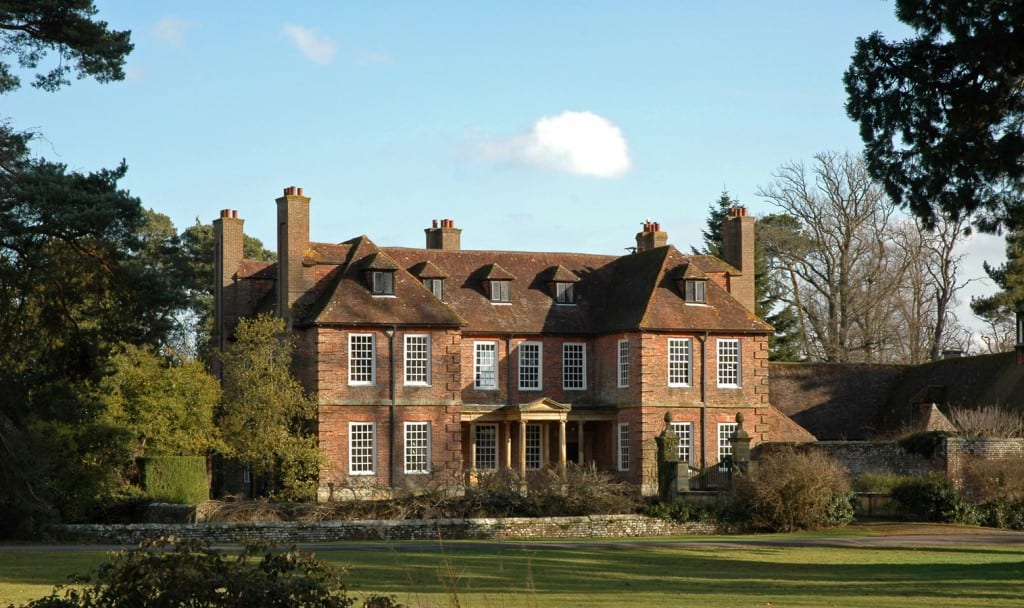
But Mom’s first week with in-home Hopsice care happened to be the same week I’d registered for an online reading/writing retreat centered on Pride and Prejudice. (It was run by Common Ground Pilgrimages, and seriously folks, if you love books as much as I do, I cannot recommend their programming highly enough.) I’ve always loved P&P — it’s tied with Northanger Abbey as my favorite Austen work — but the timing of this particular reading means that now I will always cherish it in a new way. Thanks to pop culture takes on Austen, it’s easy to read her works focused on marriage and romance. This time, rather than focusing on Mr. Darcy (about whom I have mixed feelings anyway), I paid far more attention to Longbourn. I focused on the Bennets’ home instead.

I have always looked at any talk of property in Austen’s novels through the class system lens, and rolled my eyes at it. “All these people care about is acquiring more money,” I might say, “or at least holding on to the wealth they already have. How shallow can you possibly be?” But now, facing the death of a beloved parent and knowing that death most likely will result in having to sell the house I grew up in, I’m looking at the Bennets’ need to hold on to Longbourn in a very different light.

[Obligatory Good Progressive preamble paragraph here in which I acknowledge the privilege that allows me to have grown up in a family who lived in the same house most of my life, and who eventually were able to buy the house they were renting, and allows me to take time off work to take care of my mother, blah blah blah. Privilege dutifully acknowledged, and privilege be damned –helplessly watching a parent wither and die of cancer in front of you sucks beyond all measure and that’s pretty much all I have emotional space for right now.]

But back to Longbourn. Even in Austen novels, a house means more than wealth (though it is also wealth and status, of course). A house is made of memories. Lizzie isn’t just throwing away her family’s security and future when she refuses Collins: she’s throwing away her family’s history as well. Every secret whispered to Jane. Every daughter’s birth. Every walk taken on the grounds. Every time she read a book in the library with her father. Every time a member of the family hid in a corner for a moment’s peace. Every quietly broken heart (or loudly broken heart). Every shared eyeroll. Every worrisome illness, and the rejoicing when that illness was overcome. Every Christmas, and every obsessive preparation for every dance. Good times and bad. Longbourn is more than a house and servants. Longbourn is the collective childhood of the Bennet sisters and the culmination of the family that Mr. and Mrs. Bennet have created. (Which makes it even more interesting to reflect on the many instances when Austen conflates descriptions of houses with descriptions of their owners. When she describes Darcy’s house as “handsome” and “lofty,” for instance.) Lizzie turns down a chance to hold on to that past happiness for an unknown future that may – or may not – contain unknown happiness of a different kind. The girls won’t just be destitute, they will be HOME-less.

There’s this cliche that movies always use to establish a well-loved family home. Nothing snazzy, maybe just a closeup shot of a set of ascending marks on the wall, labelled with a child’s name — or multiple sets of marks with multiple children’s names, for added pathos. If the movie wants to be less subtle, it might feature a golden-tinged montage of the little tykes growing like weeds, running excitedly to the wall to have each increment of their growth documented. We don’t have any of those markings in my childhood home. (Possibly because I stopped getting taller around sixth grade, and resented that fact. But I digress.)

There are other marks on the walls, though. Marks from my guitar cases, age ten onward, when I ran too hurriedly to my room coming home from practice. Grimy handprints on the kitchen doorframes that Mom never got around to painting over. Countless pin holes in the wall of an adolescent’s room that was decorated and redecorated with posters and magazine cutouts of her favorite bands. And there are memory marks on the house, as well. This the is banister I tried to swing from then ended up breaking my wrist in middle school. This is the bed I grew up sleeping in, but instead of here it used to be over there, where I talked to the boy I loved on the phone until 4am one Christmas Eve. This is the living room hastily transformed into a makeshift bedroom that summer in college while I recovered from a terrible car accident, and had to sleep downstairs for months because I couldn’t climb stairs. The same room where Hospice carried my mother down the stairs into a loaned hospital bed, in what would be her last trip down those stairs. Now it will always be the room where my mother died.

I’m grateful that my mother was able to pass away at home, Regency era-style, surrounded by familiar objects and windows and curtains and lamps. I’m grateful that she spent her last breath in the home she poured so much of her soul into. It’s only “stuff”–until it’s not. Until it holds meaning. Until it holds history.

Looking around at the house that helped shape me, and knowing that I may have to finally say goodbye to it sometime soon, feels almost unbearable. And I’m grateful that I won’t have to say goodbye right away because I don’t know that I could take another loss that big at the moment.

So I may not approve of your methods for holding onto Longbourn, Mrs. Bennet, but…I get it now. I really do.

THE MIDNIGHT HOUR Review: Alternate Magical London for the Steampunk Tween

“Her eyes and heart and head were overfull; the waterfall of images was a wonder, not terrifying, or at least not *just* terrifying. It was a feast, and for all the awfulness of what was happening to her, she knew this was something special she’d take with her for the rest of her life. Which might not be very long if any of the crowd got peckish…”

The Midnight Hour, 2020

Anyone else out there love John Bellairs when they were growing up? I did. I read The House With a Clock in its Walls multiple times, then devoured every other Bellairs title my local library had: The Curse of the Blue Figurine, The Mummy, the Will, and the Crypt, The Trolley to Yesterday, and such. The illustrations in those books were also my introduction to Edward Gorey’s artwork, and I love them for that.

I don’t see Bellairs novels in bookstores or libraries all that often anymore, and that’s too bad, because I haven’t found many newer middle grade books that can match Bellairs’ unique brand of lighthearted gothic mystery. Kate Middleton’s fantastic Greenglass House series comes close, and now The Midnight Hour. In a middle grade market awash in various versions of hidden magical Londons, let’s dive into this new addition, shall we?

the story

The story kicks off just before the stroke of midnight, as Emily Featherhaugh stews upstairs in her bedroom following a heated fight with her mother. Her mother doesn’t fit in with regular society much, and Emily finds her embarrassing. Emily watches a shadowy figure drop off a strange-looking envelope at her house, and soon her mother sets off into the night. When her mother doesn’t return, Emily’s father goes searching for her. When her father doesn’t return, either, Emily goes searching for them both.

[FROM HERE THERE BE SPOILERS. YE HAVE BEEN WARNED.]

Chased by a terrifying and inhuman pursuer, Emily finds her way to the office of the Night Post, which leads her to the Midnight Hour: an alternate realm where London (or a steampunk vision thereof) has been frozen at midnight in the year 1859. Also, it’s populated entirely by magical and mythical creatures, known as the Night Folk, who live in this time pocket as a sanctuary from the Muggles Day Folk. Her father has disappeared into the Night World and her mother has been captured by The Nocturne, one of the three Older Powers who predate all other Night Folk. The Nocturne wants to end the Midnight Hour sanctuary and return to the human world. Emily teams up with a rookie Night World cop (a ghul) named Tarkus to rescue her mom, learning along the way that her mother (1) is a pooka (pucka), (2) was instrumental in creating the Midnight Hour sanctuary and fought The Nocture in the past, and (3) left the Night World to marry a badass member of the Night Post (Emily’s dad) and gave birth to a pooka daughter (Emily herself). Emily must dodge all sorts of dangerous creatures to save her family and the Midnight Hour, and shenanigans ensue.

THE BABBLE

This book is FUN, you guys. And genuinely spooky in places. I opened by talking about John Bellairs because reading the first chapter of The Midnight Hour brought me back to reading his books: an intriguing mystery discovered in the dead of night, suspicion of the supernatural, and adolescent worries. In fact, the first few chapters of this novel are pretty airtight. Great suspense, great action, not to mention the Bear’s manifestation in the Day World is creepy (to the point where I was slightly disappointed to learn that he’s ultimately just a big supernatural bear). I also enjoy the rocky friendship between Emily and Tarkus.

And the Bear isn’t the only terrifying creature here. Many of the Night Folk in the Night World are just ordinary creatures trying to get by, but many of the dark creatures in this world are genuinely dark, which I think plenty of middle grade readers might find refreshing. The whole thing has a very Neil Gaiman vibe –not only did this remind me of his middle grade work like The Graveyard Book (one of my all-time favorites) but it particularly felt like a kid-friendly Neverwhere. A Neverwhere primer, if you will. And that’s fine by me.

If I have an objection to this novel, it’s related to tone. Midnight Hour has two authors, Benjamin Read and Laura Trinder, and as with all writing duos I’m curious to hear how they divided writing labor. I’m especially curious this time because the book blends gothic fantasy writing with, shall we say, Kid Lit Snark Voice. That’s a tricky balance to strike, and the novel doesn’t always blend those two tones seamlessly. Take this paragraph, for instance:

“In the shock of the rhino, she’d missed the building behind them. It loomed, a mix between a tomb and a mansion. It had high arched church windows, a statue-lined path leading up to it, and a giant front door. There was no doubt this was her destination. Great. Not even slightly ominous.”

The Midnight Hour, 2020

See what I mean? Contrast this with the first chapter, which opens with Emily meditating on typical preteen angst about her mother’s inability to understand her and how unfair life is — only to be rudely interrupted by a gothic adventure shortly before midnight. There are places in the novel where smashing these two tones together brilliantly captures the feeling of throwing a modern preteen into a magical version of 1859 London, but to me it occasionally feels a bit jarring or forced.

Lastly, I want to talk about Emily’s “gob,” or her temper. I kinda love that this particular heroine’s quest rides on her having a quick temper. (The Librarian says she has been singled out because she is “difficult,” as is her mother. Ha.) How far we’ve come from girl protagonists in books like The Secret Garden, where the heroine’s entire arc involved our lead learning to control her temper and act more ladylike/civil. Here, it’s not only acceptable, but necessary for Emily to be “difficult.” I’m here for it.

All in all, this is a promising middle grade read. A fun Harry Potter alternative for readers who might find The Bookwanderers too cozy.

RATING

*** out of 4

RANDOM BABBLE

  • I love that the three Older Powers are, eldest to youngest: Music, Art, Language. That detail made my heart sing.
  • It has to be said: I’m not Irish or of (much) Irish descent, but if I was, I might be a little offended by the Irish stereotypes that appear in this novel.
  • Gotta love any final battle sequence that takes place inside the workings of a magical Big Ben. (Not sarcasm, I truly loved it.)
  • As someone fascinated with Puck from A Midsummer Night’s Dream, I geek squealed when the novel casually dropped the detail that pookas generally manifest as a horse, a hound, or a hare. Also, I love that the glass artwork on Emily’s bedroom wall with the three black glass hares comes into play later on with her own shapeshifting form.
  • Is it me, or could Hot Topic just release an entire Midnight Hour-branded line with very little effort?

CHILDREN OF BLOOD AND BONE Review: Basically, Just Go Read this Novel. Right Now.

“You crushed us to build your monarchy on the backs of our blood and bone. Your mistake wasn’t keeping us alive. It was thinking we’d never fight back.”

CHILDREN OF BLOOD AND BONE, Tomi Adeyemi, 2018

Have you read CHILDREN OF BLOOD AND BONE yet? If not, why haven’t you read CHILDREN OF BLOOD AND BONE yet? It’s like a creative cocktail of STAR WARS and BLACK PANTHER and AVATAR: THE LAST AIRBENDER, and also something magically unique unto itself. This novel is a glorious and powerful fantasy work.

Now, if you have the right sort of taste (as in you share my taste), then that description alone should have been all it took to send you scrambling to buy this novel and its sequel from your nearest indie bookstore, preferably a black-owned indie bookstore. But this wouldn’t be much of a blog post if I didn’t write more, so here we go.

THE STORY

Okay. There’s a lot of story here, and I don’t want to spoil too much of it. In the land of Orisha there used to be Maji, people who could wield magic given by the gods. Maji were divided into clans based on the type of magic they wielded (sorta like the nations in A:TLA, only there are lots more clans than nations). But the non-magic kosidán became afraid/jealous/greedy of the maji’s powers, beginning a long war that supposedly ended in a great slaughter of maji called The Raid, which coincided with the retreat of magic and the gods from Orisha. Those of maji blood still exist – and are irrevocably marked by their distinctive white hair – but they have no magic. Over the years the kosidán have become the ruling class and do a textbook job of keeping the maji oppressed to discourage rebellion: maji are referred to by the derogatory slur “maggot,” they are kept in low-wage positions, are punished with unfair taxes, and when they can’t pay those taxes they get forced down the prison pipeline into what is essentially slave labor.

Into this society appear magical artifacts that could restore the link between maji and the gods, thus restoring magic to the maji. A maji girl, Zélie, and her non-magical brother, Tzain, find themselves drawn into a plot to restore magic when Amari, daughter to the ruthless King of Orisha, steals one of the artifacts and runs away. Together the three of them race against time and geography to perform an important ritual needed to restore not just Zélie’s magic, but the magic of every oppressed maji in Orisha. All the while they’re pursued by Inan, Amari’s older brother, who turns out to have some magical abilities of his own. And oh, also Zélie becomes the literal embodiment of Black Girl Magic.

THE BABBLE

What can I say? If you’re looking to read an #OwnVoices book that touches on so many of the issues and emotions behind the Black Lives Matter movement – fear, police brutality, injustice, institutionalized oppression, colorism, proper allyship, economic inequality, and privilege – but also happens to be a damn good adventure fantasy story…this is the book for you. The characters fill archetypes, sure, but they’re also beautifully realized. You will love them by the end, and because Adeyemi writes in rotating first person narrative between three of the main characters, you will love all of them by the end.

Adeyemi walks this tightrope between achingly relevant social commentary and Star Wars-style adventure so expertly, too. At least to this reader’s eyes, YA novels that tackle big issues often tend to just have a character or narration boldly state a political viewpoint (or a straw man position) to save time and get all readers on the same page. Adeyemi never does that, but her point is just as clear. For example, the police brutality and corruption in this novel exist very much within the lived-in, detailed world of Orisha, and that detail makes the parallels to our world feel like a discovery rather than a lecture. Which makes that discovery even more of a punch in the gut. The same with the characters’ viewpoints: these are fully-fleshed characters, so trying on their views as they wrestle with the complex issues at play in a society built on prejudice doesn’t feel like reading a point-counterpoint summary. I know THE HATE U GIVE may always be considered the seminal YA work of the BLM movement, but I’ll be trying my hardest to get this fantasy novel into as many hands as possible as well. I think they both have the same goal, and there is definitely more than enough room for both and more (many more, can we please have more?), but Adeyemi has created the more complex work here.

Do I have any small quibbles? Of course, because I almost always do. Only quibble here is I felt like this novel may have been just as effective with one fewer back-stabbing betrayal, one fewer climax? It’s 544 pages long, after all, so I’d have been just as invested without as many fight scenes. But Adeyemi has written a blockbuster movie in novel form, and most blockbuster movies have a few too many fight scenes, and she knows how to write a fantastic and suspenseful fight scene, so this isn’t much of a complaint.

Read this novel. Just read it. Then give it to all your friends.

RATING

**** out of 4

RANDOM BABBLE

  • No POV chapters for poor Tzain, which is too bad because Tzain’s a wonderful guy.
  • The blackness of Orisha feels so celebratory, rather than feeling like exoticism. One of many reasons why we need to publish more POC authors. (In every genre, but especially in fantasy/sci fi.)
  • Almost too many betrayals go with the almost too many will-they-won’t-they moments, and that’s all I’ll say about that (I’m more than halfway through the second book, CHILDREN OF VIRTUE AND VENGEANCE, and I can confidently say this issue stretches beyond the first book in the series).
  • If Inan’s abilities don’t act as an argument for radical empathy being part of the solution to systematic racism, I don’t know what will. But I’m a theatre kid and book nerd, so of course I’d say that.
  • That moment when Zélie screams, “I am always afraid!” Fuuuuuck.
  • I don’t normally suggest audiobooks over physical books or vice versa, but if you have 17 hours to fill, I highly recommend the audiobook version of this one. Bahni Turpin’s reading is a phenomenal performance that gives new depth to the phrase Black Voices Matter.

Oh, and in case I didn’t make this clear in my review for The Parker Inheritance:

THE WATER BEARS Review: Whimsy with a Dollop of Trauma

“People always ask if I’m okay,” I said. “But I don’t think I have the same kind of okay as them anymore. They just want me to say I’m good so they feel better.”

THE WATER BEARS, Kim Baker, 2020

The newer middle grade novels I read often fall into two broad categories: whimsical books about fantasy and magic and maybe a dash of sci fi, and realistic novels about the trials of middle/elementary school or processing family issues/racial issues/sexual issues/other trauma issues and so on. I love both categories, of course, but I’ve rarely seen them overlap as charmingly or uniquely as they do in The Water Bears.

Folks, is it just me, or are we living in a new golden age of middle grade fiction? I can’t believe how many newer novels I’ve picked up in recent months that manage to both honor the feel of the “classics” and also address relevant social questions in a fun, engaging, literary way. There’s just so much good writing out there. It almost makes me wish I were still a kid…but I’m glad my job gives me an excuse to read lots of children’s literature, which is the next best thing.

the story

Newt lives with his family on [sadly fictional] Murphy Island, a quirky artist colony that feels like an Island of Misfit Toys for families. Newt hates standing out, and unfortunately he stands out for two reasons: one, he belongs to the only Latinx family on the island, and two, last summer he survived a bear attack and still struggles with a leg injury and mobility issues. He would love nothing more than to escape the island altogether to live with the rest of his extended Latinx family on the mainland, where he thinks he can start fresh and won’t always be known as That Poor Kid Who Got Attacked by a Bear. Plus, he’s still dealing with nightmares and other PTSD symptoms from the attack.

Sounds like a good Realism Novel for this age group, yeah? Only that doesn’t factor in a mythical lake beast, a bear statue carved from driftwood that may or may not grant wishes, a thirteen-year-old allowed to drive a retired food truck while all the adults look the other way, an annual circus talent show that provides catharsis for Newt and his guilt-stricken mother, a mysterious truck-napping stranger, goats in the house, an island full of wild parrots and monkeys and abandoned resort trappings, and much more. Throughout the novel Newt navigates his friendship with Ethan, a fellow island resident who adores living on the island in all its whimsical glory, and a new island arrival named Izzy.

THE BABBLE

[From here there be spoilers. Ye have been warned.]

It used to be said that children had no sense of irony, that what distinguished children from adults was their sincerity, their acceptance, their openness. Not for the child was the jaded weariness of grown-up life, the disappointments in friends, family, and leadership. But children have been coming into their ironic own for decades…They learn that people lie. They learn, too, that their own beliefs may not be shared by others.

CHILDREN’S LITERATURE: A READER’S HISTORY FROM AESOP TO HARRY POTTER, Seth Lerer, 2008

The Water Bears is so full of whimsy it should have no room to sensitively explore residual trauma, yet it does so. It shouldn’t work. It does work, beautifully, and I loved it.

The island setting is richly painted through imaginative details based on an abandoned resort that once provided a long-ago tourist attraction and now provides crumbling infrastructure: for instance, the parrots once used in an entertainment show that have now formed the island’s own native wild flock; the small alternate school for island families where kids eat their lunch in the resort’s drained swimming pool; the bell that can be heard throughout the island to signal for tourists when whales have been sighted–or when a terrible storm is coming.

I also loved the way that the book handles trauma processing, not only in how Newt gradually processes his attack but in the way his whole family deals with it. His mother clearly still struggles with the incident and her (largely blameless) role in it — the guilt has cost her a friendship, and one of her primary sources of joy. Newt’s veteran brother connects to him by recommending a PTSD therapist. I love that his little sister even gets a chance to talk about how his injury and recovery has impacted her life. And Newt? The novel paints a beautiful portrait of an adolescent boy who suffered a highly unusual attack, and has allowed injury and self-consciousness to define who he is. Something undeniably weird has happened to him, at precisely the time in life when no one wants to be associated with anything weird.

Newt’s weariness at playacting “okay,” his desire to just escape the claustrophobic island community and start over, his illogical fear of places and people associated with the time of the attack…it’s all so relatable and so genuine. As a former survivor of a traumatic accident (that had everyone asking how I’m doing for years and, honestly, 16 years later people in my hometown are still asking me that question when they see me), I related to Newt’s struggle. As an actress, I love that an anonymous reconnection with the joy of live performance helped him down the road to recovery.

My only small question relates to the eponymous water bears themselves, microscopic organisms that Newt discovers and researches for a school report. I get that the little creatures’ name keeps in line with the whimsical recurrence of bears in Newt’s life, and that their ability to survive in even the most difficult environments is symbolic of Newt’s resilience. But still, something about their repeated appearance felt a little shoehorned in to me — almost as if Baker initially featured them in one chapter, and the publisher/editor made her come back to them multiple times because of the manuscript title? But it’s not a major issue or anything.

Another observation – and this isn’t a complaint, just something that caught my eye – deals with Izzy. She reminded me very much of Jolene in Here in the Real World by Sara Pennypacker (also an amazing 2020 novel), which makes Izzy the second iteration I’ve encountered this year of an emerging female character type in middle grade novels featuring boy lead characters: the fascinating girl with a tragic home life who becomes a new friend to the shy protagonist. She coaxes him out of his awkward preteen turtle shell by broadening his worldview and awakening both his compassion and his protective instincts. What should we call this type? Not the Manic Pixie Dream Girl, since it’s middle grade so these are (largely) friendly relationships rather than romantic ones. Maybe the MPDG’s spunky little sister, the Tragic Pixie Friend Girl? Anyway, it’s an interesting trend. I don’t necessarily feel one way or the other about it yet, just wanted to note it here.

Also, I’ve included the Seth Lerer quote above from another book I recently finished (I don’t 100% agree with all of Lerer’s frameworks, but it’s still a great read if you love children’s literature) because I think it pairs well with the quote from Water Bears at the top. Sometimes a child narrator’s disillusionment comes across as smartass. Other times it breaks your heart. The Water Bears will break your heart and make you smile…and make you extremely sad that Murphy Island isn’t a real place open to visitors. I hope it gets serious consideration for this year’s Newberry Medal.

RATING

*** 1/2 out of 4

RANDOM BABBLE

  • I’m generally not a fan of goats in real life (one tried to eat my hair when I was little and I’ve been in a fight with goats ever since), but I’m a fan of the goats in this book, which just shows how delightfully Baker portrays the goat members of the Gomez family.
  • I appreciate that Baker resisted the urge to have Newt see Marvelo at the end of the book. A more cliched book would have done that, but it feels more appropriate for Ethan to see the mythical beast.
  • I died laughing during every sequence that involved driving The Rooster. Whimsical comedy to the max.
  • Sweet Ethan. What a good kid. It’s so friggin’ hard to be abandoned by a best friend, and my heart broke for him when Newt told him he was moving to the mainland.
  • I also love that the very scenario of Newt’s trauma – a bear attack while berry picking in the brambles – sounds like something whimsical out of a children’s book. But for Newt, it’s anything but.

A COURT OF THORNS AND ROSES Review: Beauty and the SortaBeast

Against slavery, against tyranny, I would gladly go to my death, no matter whose freedom I was defending.

A Court of Thorns and Roses, Sarah J. Maas, 2015

After my last post about A Midsummer Night’s Dream, I feel like I’m on a roll with this whole Faerie lore and questionable sex-with-beasts thing, so let’s turn to a story that at least involves fewer issues around consent, shall we?

Sarah J. Maas titles sell like crazy at the bookstore where I work, so I’ve been curious to see what all the fuss is about. This is my first Sarah J. Maas novel and I enjoyed it. I love me some dark fairy tales, and I’m loving the dark faerie revival in YA fantasy. Faeries are clearly the new vampires in YA and I’m here for it — faerie lore feels much more varied and interesting than vampire lore, honestly. (How much can there be to vampire lore? They bite. They fight. They brood. Sometimes they sparkle.) Holly Black is one of my absolute favorite fantasy authors, Melissa Albert is another, and while the Gathering of Faerie books aren’t my favorite of Maggie Stiefvater’s novels (I’m ride or die for Scorpio Races and everything that’s come since, especially The Raven Cycle), they certainly stand head and shoulders above most fantasy books out there. A Court of Thorns and Roses is another fine entry in this genre, as well as a fresh new take on Beauty and the Beast.

And lordy lordy, So. Much. Happens. In this book.

the story

Folks, I just…there is an impressive amount of plot in this novel. So much that by the time I got to the part where most novels would be gearing up for the climactic finale, I was stunned to realize I still had quite a bit of book left to go. (Cue obligatory comparison to Return of the King‘s multiple endings, except that I’m a giant LOTR fan who will argue that each of those endings was dramatically necessary and that, furthermore, the book has even more endings, so really Peter Jackson cut us a break.)

Anyhoo. So. Our heroine is Belle Feyre, and she is a total badass huntress who lives on the edge of town, which lies on the border of Prythian, better known for all intents and purposes as the land of Faerie. In this universe, Faeries once ruled over humans and worked them as laborers before the humans revolted and formed an uneasy treaty many years ago. Feyre spends her days hunting, Katniss-style, to feed and take care of her ungrateful sisters and father. Her family used to be wealthy but times have changed – though she seems to be the only member of the family to have changed with the times.

One day she slays the wrong wolf on a hunt: it’s actually a Faerie warrior in wolf form. Soon that Faerie’s friend, in even bigger Beast form, breaks down her family’s door and steals her away with him to Prythian in retribution. Once in Prythian, she discovers that the Beast is one of the seven High Lords of Faerie, and also Lord of the Spring Court, which is to be her new home. Because this is a Beauty and the Beast adaptation, you know this story. Turns out the Beast/High Lord, name of Tamlin, isn’t all that beastly after all once you get to know him, they fall in love, etc.

[FROM HERE THERE BE SPOILERS. YE HAVE BEEN WARNED.]

But not too many spoilers, because seriously, trying to sum up this whole story would take me all day. Suffice it to say that Tamlin and his court are cursed, including Feyre’s attendant/ally/friend Mrs. Potts Alis; Tamlin needs the love of a human who hates faeries to break the curse; also there’s an evil High Queen of Prythian who loves Tamlin (?!) and that’s why she cursed him, which seems a bit much but whatever; and Feyre has to go through a lot of torture and trials before love can prevail. Oh, and also Feyre meets another hot High Lord who seems obsessed with her, and this one has dark hair instead of blonde hair, so you know there must be a love triangle on the way.

the babble

I love Maas’ lush writing style, her vivid descriptions, and the detailed world she’s created here. And damned if she doesn’t know how to write an action sequence. The lore of her particular brand of Faerie culture sounds fascinating, and I look forward to learning more about it in the rest of the books, which I plan to read at some point.

I also appreciated her twists on traditional fairy tale tropes. The strained family dynamics between Feyre and her sisters and her father were so compelling, like something straight out of the Brothers Grimm. And the “impossible tasks” she must complete once she’s imprisoned Under the Mountain — especially the moment when Lucien’s mother helps her with cleaning the floor — come straight from Rumplestiltskin or an old Baba Yaga tale. It’s delicious storytelling.

Here’s the slight problem: I cared way more about those things than I did about Feyre’s love story with Tamlin — or her budding connection with Rhysand, for that matter. (I’ve had multiple friends look like they’re about to explode from holding in spoilers when I talk about how unconvincing I found Feyre’s soulmate connection to Tamlin and YES I GET IT, GUYS, MAAS IS SETTING UP RHYSAND AS A SECOND LOVE INTEREST.) I would much rather have read more scenes between Feyre and her complicated sister Nesta, or Feyre and Lucien, or Feyre and Alis. Those relationships felt far more compelling to me than her conversations (verbal or physical, *ahem*) with either High Lord. Maybe I’m just getting old and jaded, or maybe it’s that the physical descriptions of Tamlin and Rhysand make them sound like a direct retread of the Rob/Gabriel love triangle from L.J. Smith’s Dark Visions trilogy, which I already read and adored back when I was the right age to believe that true love can bloom just because two people are pretty and because the author tells you it’s blooming. Regardless, while I care about both Feyre and Tamlin in their own right and I’m glad they’re happy (for now?), I don’t feel Maas gave them enough scenes to let their relationship grow naturally.

Also, could it be? Yes it could! A Court of Thorns and Roses brings us to this blog’s first encounter with the YA Green Eyed Love Interest phenomenon, in which YA love interests (usually male, sometimes female) disproportionately have green eyes. Which means this novel receives Bookshelves and Babble’s inaugural Green Eye Eye Roll:

rating

***ish out of 4, but mostly because this blog is public and I don’t want hordes of Maas fans to descend upon me

random babble

  • The scene where Feyre kills that giant worm monster is harrowing and excellently plotted. Feyre is such a badass.
  • I love that Feyre’s name plays on both “faerie” and “fair,” as in beautiful. Well done, Maas.
  • Anyone else out there a Feyre/Lucien shipper, or is it just me? Lucien is the best. More Lucien, please.
  • The structure of this story felt a little…lopsided. The first half or so took its time and was so rich in character development and detail, while the second half felt like a great rush of plot reveals and explanations. And not to be a grouch, but Amarantha’s curse on the Spring Court is oddly and conveniently specific…almost as if it was custom-tailored to suit Feyre and get us to exactly this point in the book! What are the chances.
  • I enjoyed Feyre’s artistic passions and her love of painting. Art provided a great way for Maas to show us the ways in which Prythian has been good for Feyre: after witnessing how she strangled her talent to take care of her family back home, she can finally allow her art to grow and blossom in the Spring Court.
  • Two facts about Teenage Kristin that might help put my reaction to this novel in perspective: (1) While I still enjoy these stories, I especially loved romantic fanstasy/sci fi when I was in middle school and high school. L.J. Smith was my favorite author at the time. I was all about cross-magical species soulmate stories, so if I were still a teen I would probably think this was the most brilliant book I’d ever read and give it 4 out of 4 stars. Except that (2) Teenage Kristin was also an insufferable, prudish Goody Two-Shoes, so those Feyre/Tamlin sex scenes would have made my skin crawl as a teen, just like similar scenes did when I read Stephen King and such. I’m not about to yuck anyone’s yum and I’m definitely about to date myself here, but I can’t help but remember people in my hometown raising eyebrows because a Christopher Pike YA novel described sex in a single sentence. Feyre and Tamlin get whole paragraphs that tell you exactly where he puts his hands and his mouth and his tongue and the like. It’s steamy AF (literally AF). I think he actually rips her literal bodice in beast form at some point. Damn, y’all. BUT. All that being said, I’m here for this new trend of YA sex scenes modeling very clear consent between both partners. (Though I would argue that their first encounter, after the Fire Night celebration, very much does not model consent and instead perpetuates the harmful stereotype of a woman being turned on after the man doesn’t listen to her saying “no” and continues his advances. The fact that he’s magically transformed by a ritual into beast form doesn’t entirely excuse that. So…a draw, then, on the consent issue?)
  • Along the same lines, dear reader, what are your thoughts on this whole “new adult” marketing label in fiction? Do you have the same mixed feelings about it that I do? I understand not wanting to potentially restrict access by placing more mature YA books in the adult section, but…I didn’t have any trouble walking over to the adult fantasy/science fiction section when I was a kid, did you? I took a class related to this subject last semester in my MLIS program and it’s such a thorny discussion topic. (Points if you got my pun there.)

A Midsummer Night’s Fluid Sexuality Party: Thoughts on the National Theatre’s A MIDSUMMER NIGHT’S DREAM

Taking a break from books for a second to talk about something equally nerdy, I just barely got in a watch of National Theatre at Home‘s A Midsummer Night’s Dream before Les Blancs replaces it today, and I have so many thoughts. Enough to fill a post, methinks.

I remember reading a few reviews about the production last year when it was up and running, and I remember it sounded interesting and explosive, and then I promptly forgot about it beyond some gorgeous photos of Gwendoline Christie beaming from an aerial silk hammock. And Christie is mostly great in this, but there’s so much more to talk about. So here’s a thought roundup from your resident Shakespeare geek.

But let’s answer your most burning question first: after watching A Midsummer Night’s Dream, does my crush on Oliver Chris remain intact? Yes, dear reader, it does. I loved him in One Man, Two Guvnors, I loved him in Twelfth Night, I loved him in the excellent new film version of Emma, and I really, really love him in this. The guy can make Shakespearean verse sing like nobody’s business. He has a talent for making me notice lines I’ve never focused on before, even in plays I’ve seen and read a gazillion times (like Midsummer and Twelfth Night). He also manages to make me genuinely care about characters whom I usually dislike: he’s still the only Orsino I’ve ever felt even remotely sorry for, and his Theseus is mesmerizing in the beginning and charming at the end. Who the hell is Theseus, many of you might be wondering right now? And well might you ask, because he’s one of Shakespeare’s classic Forgettable Plot Machine Authority Figures. But not when Oliver Chris plays him.

Which brings me to the first scene. I have never, nor probably ever will again, seen a production of Midsummer in which I thought the first fifteen minutes were the most powerful of the show. Usually, Act 1 Scene 1 of Midsummer is a fifteen-minute slog of exposition dump that must be dutifully borne until the Mechanicals come onstage and make us laugh with (hopefully) a lot of physical comedy and (hopefully) that stupid joke about beards cut from the script, and then we get to the woods where things really start cookin.’ Not this time. I loved the Handmaid’s Tale-Gilead-style setup, and while I initially rolled my eyes about Concept Shakespeare Nonsense when they carried out Gwendoline Christie in a glass box, it quickly became clear that the box held a place in this restrictive misogynistic society. From Christie’s expressions and reactions to Chris’ nuanced delivery, Theseus’ opening monologue established that this entire scene was going to have STAKES.

Which it should — Shakespeare’s comedies should always feel like they have life-or-death stakes, that’s what makes the endings land, at least in theory — but this production truly made the stakes punch you in the gut. Not just through Thesus’ and Egeus’ oppressive behavior toward the lovers and Hippolyta, but in Hermia’s fear, that gorgeous silent moment between Hermia and Hippolyta before the former bravely speaks up for herself, in the furtive way that she and Lysander plan their escape, and even in Helena’s fearful reaction to their plans and her flash of jealousy about escaping.

Which leads me, briefly, to Hermia, before I get on with the flashiest part of this production. I’ve seen two professional UK productions of Midsummer now, this one and the RSC’s 2008 production, and I loved both for giving Hermia’s heartbreak its proper weight. Especially once you get to the lovers’ quarrel later on, I feel like too many productions get focused on a slapstick pace and don’t slow down long enough to let her pain land, and that’s not fair to the character or her story. I thought Isis Hainsworth was heartbreaking and hilarious and I’m glad she got nominated for an award.

Okay, let’s talk about the production’s main gimmick, if you will, which is the role-flipping of Titania and Oberon in the potion plot. You know what? After a few initial moments where my brain had to adjust to hearing lines coming out of the “wrong” characters’ mouths, this worked for me! You wouldn’t think it would change that much about the play, or make you focus on how gendered that entire plot arc is, but holy shit does it ever. It had some immediate positives and negatives, though. Positives: hearing Oliver Chris deliver Titania’s gorgeous speeches about climate change, and some fascinating new motivations for Titania’s revenge plot. At least to my eyes, Oberon talking about his beloved dead votaress definitely made it sound as though he had an affair with said votaress–and Titania’s face in the background made it pretty clear that’s what she heard, too. From her perspective, he follows up an argument they’ve just had about adultery with…a story about another affair he had. From my way of thinking, this is the “injury” she wants Puck to help her revenge, as much as wanting the votaress’ son as a new henchman for herself. The fighting-over-a-new-henchman thing has always made Oberon seem like such a spoiled manbaby, and definitely NOT a good reason to roofie your wife into beastiality so you can shame her into giving you something you want (not that any legit reason for that behavior exists). So, points for a new motivation. Negative: since Chris gets to speak Titania’s most famous text here, it wound up feeling like Gwendoline Christie wasn’t left with much to do except be a powerful presence on stage — which, you know, Lady/Ser Brienne of Tarth can definitely pull that off. I went in to the show so excited to watch her perform, and so tuned in to her performance, that it ultimately highlighted for me how much the character of Oberon is really just an exposition machine masquerading as a diabolical genius.

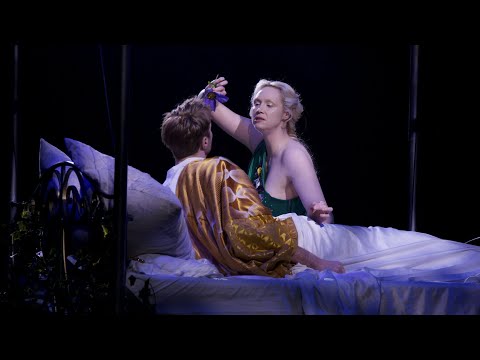
Case in point. See? They’re so adorable and sweet and cuddly (truly, they are!) if not for those pesky power dynamics issues.

And okay, yes, now it’s time to talk about my biggest issue with this production. First, I want to preface this by saying that I really loved Hammed Animashaun’s performance as Bottom the Weaver (he also very much deserved his award nomination). His version of the role was fun and goofy and unusually sweet, and I found myself rooting for his Bottom during the play within a play, rather than my usual thoughts of “Stop stealing focus from your scene partners, you jerk.” That being said, regardless of whether Oberon’s playing the love potion prank on Titania or Titania’s playing the love potion prank on Oberon, the entire prank revolves around disgust. The victim is supposed to fall into a loving relationship they would normally find abhorrent. Retooling the show so that said relationship is a same-sex one on top of a beastial one is already tricky to navigate: I think this show just managed to dance around it by making it clear that there was genuine attraction and affection between Oberon and Bottom the Weaver (sorry, I’m immature so in this particular context calling him simply Bottom makes me gigglesnort). Just barely. But Animashaun is a BIPOC actor, or at least a black-presenting actor, and this is one of those productions where the costume designer has decided that his “transformation” will only be a pair of ears on a fancy headband, leaving his face fully visible. So what the audience sees is basically a black man in modern dress being called a monster, being called a fool, being called an animal, and being forced to stay in the woods by a white man who holds all the power and wants to have sex with him. I noted that they removed Titania’s (here Oberon’s) line “My eyes do loathe his visage now” once the enchantment wears off, but still. Even before the recent BLM context of 2020 came to the forefront of our conversations, that was…yikes. Not okay. Did that come up in the rehearsal room at all? I’m so curious. Again, the actors sell it, because in Animashaun’s portrayal there is true consent happening in response to Oberon’s proposition, and their scenes together are so damn charming, heaven bless both of these men. But at least in the U.S., there’s an undeniable power dynamic at play between white faces and black faces that you can’t just ignore in a storyline that’s already fucked up when it comes to consent issues, whimsical fairyland rules or no. (I love A Midsummer Night’s Dream, you guys, it’s one of my favorites, but it’s got some issues.) I’m not trying to say that a talented BIPOC actor should never play Bottom the Weaver opposite a white Titania (or Titania/Oberon hybrid) ever again or anything, but…casting directors really, really need to think that particular pairing through for a while.

OTHER RANDOM STUFF I LOVED:

  • Aerial work. I’m a sucker for it.
  • Along those lines, Puck’s physicality was incredible. Not entirely sure what was up with his vaguely tweaking-drug-addict vocal tic though – maybe it was supposed to match the punk costume he was wearing? It was clearly a deliberate choice, because he delivered his final speech without any of the vocal tics and it was so lovely and I screamed “Where has this been?!” at the TV.
  • Gwendoline Christie in THAT DRESS. YOU KNOW THE ONE I MEAN. Of COURSE that woman is the Fairy Queen. Duh.
THIS DRESS. THIS ONE RIGHT HERE.
  • Gwendoline Christie’s face acting. She speaks volumes in that first scene while barely speaking a word. When she finally gets to be witty during the play within a play scene, it’s such a rush.
  • Another thing both British Midsummers I’ve seen have done: they really go for that dirty “kissed thy stones” joke during the play within a play and I am here for it.
  • Another thing I’m here for: Hermia dropping an F-bomb in ad-lib. Normally I find modern speech ad-libs in Shakespeare productions annoying, but this time I enjoyed them. Puck had some great ones, and Theseus’ “Oh, it’s a hat” about the Lion costume broke me (and Gwendoline Christie, too, from the looks of things).
  • The “Give me your fist” joke with Mustardseed. I died. Normally that scene is so boring — and I say that as a Shakespeare fanatic — but they made it work.
  • Puck’s response to having to fetch Helena for Titania. And his gag about losing the flower. If I ever play Puck again, I’m so stealing that flower gag.
  • All of the lovers were strong. It’s nice when that happens.
  • I loved Starveling. She was so over it. Or maybe just pissed that she wasn’t playing Thisbe? It does make the cross-dressing joke more difficult if you have a mixed-gender group of Mechanicals and still insist on having Flute be male-presenting.
  • Just when you think the play within a play can never show you something new, Thisbe summons Hermia, Helena, and Hippolyta onto the stage within a stage for “O, sisters three,” and it’s a gorgeous moment.

other random stuff I didn’t love

  • I thought most of the costume design was…just, why? Except for the Gilead stuff at the beginning. And that dress. You know what, who are we kidding, all anyone is going to remember about costumes in this show is THAT DRESS, and possibly Oberon’s matching overcoat in the final scene.
  • I love the whole “the play was Theseus’ vision quest to learn about the importance of love and renounce hetero misogyny” thing, but the moment where he remembers his own dream was waaaaaaaaay oversold. As soon as the sound system started playing flashbacks of his own voice speaking words of love to Bottom the Weaver, I cringed and put my hands over my ears. Just fly the bed across the stage with a magical sound effect and let Oliver Chris and Gwendoline Christie do their brilliant acting. The audience is not stupid. Stop treating us like we’re stupid.
  • About Christie: I loved her as Hippolyta and she was an imposing presence as Titania, but did anyone else get the feeling she’d been directed to deliver her Oberon-reassigned-to-Titania lines, like, REALLY BIG AND LOUD WITH BIG, GRACEFUL ARM GESTURES? She obviously knows her way around Shakespearean text because there were plenty of lines she delivered with beautiful nuance. But there were also parts of her lines that she played as overexcited (“there the snake throws her enamell’d skin” was one, I remember) for seemingly no reason. It felt like a director’s choice made for pacing purposes. It was weird, and I don’t like directors who make my beloved Gwendoline look like anything other than the absolute goddess of everything that she is.
  • The same-sex kisses during the lover’s quarrel were, I’m guessing, meant to soften some of my objections above, by not making Oberon/Bottom the Weaver the only same-sex instance in the play, and painting the woods as a place where sexuality is a fluid thing to be joyfully explored? Which is a great idea, and would have worked much better for me if the staging of those moments hadn’t been so rushed.
  • Similarly, maybe it was impossible to shoot properly and you just had to be there, but the “up and down” chase sequence staging was…awkward and confusing? Having all four lovers end up tangled on a tiny bed might work for your visual metaphor but it doesn’t work for the scene. And the scene should always win.

There’s more, believe it or not, I’m sure there’s more, but I’ve already written more than I wrote for some of my college papers so I’ll stop there. If you made it this far, congratulations. In summary, watch National Theatre at Home every week and donate money! They produce beautiful, thought-provoking stuff and while it’s not the same as being there in person, the recordings are fantastic and give you a better seat for free than you could get for under the equivalent of $200.

Back to youth literature next time, promise!

PAGES AND CO.: THE LOST FAIRY TALES: Not as Strong as the First Outing, but Still Plenty to Love

“And what she read came to be all around them, until the bed was like a boat in a river of flowers. They were surrounded by plants of all kinds and colors, both those described in the book and many more besides them.”

The Lost Fairy Tales, Anna James, 2020

Tilly, Oskar, and the Pages family continue their bookwandering adventures in this second installment from Anna James. Like many second books in a series, The Lost Fairy Tales feels like a setup for a proper series, with ongoing animosities and unresolved mysteries and what have you, whereas last year’s The Bookwanderers felt more like a delicious slice of bibliophilic bliss. (Guess it’s probably easier to take chances once your publisher knows that enough people already love your book to keep buying beyond a one-off.) I didn’t feel quite as enamored with this one as I did with the first, but considering just how enamored I felt about the first, that’s not too strong a complaint.

the story

Lost Fairy Tales starts off pretty much where Bookwanderers ended: Tilly’s mother, Bea, is back in the real world after years trapped in a book, while Enoch Chalk has disappeared and the Underlibrary remains in an uproar. Friend of the family and Head Librarian Amelia is forced to resign over the Enoch Chalk scandal, only to be replaced by a man named Melville Underwood. Underwood seems nice, which means he’s probably sinister – as proven shortly thereafter when he bans the Pages from the Underlibrary and attempts (unsuccessfully) to place tracers on Tilly and Oskar.

[FROM HERE THERE BE SPOILERS. YE HAVE BEEN WARNED.]

Back at home, Tilly begins showing signs of rebellious teenagerdom, and Bea continues to struggle with readjusting to her new life. The Pages agree that Tilly should accompany Oskar to spend a few days in Paris with his family over the Christmas holiday. While in Paris, our intrepid heroes break their promise not to bookwander by wandering into books of fairy tales (a notoriously dangerous thing to do) with Oskar’s cool bookwandering grandmother and her mysterious bookwanderer friend, Gretchen. Gretchen happens to have been former partners with Tilly’s grandmother doing research on fairy tales for the British Underlibrary, before they had a mysterious falling out.

Through a series of adventures in fairy tales, Tilly and Oksar discover that someone has begun to collapse fairy tales from the inside, making them even more unstable and dangerous places to wander than before. They also meet a devious set of twins who may be in league with Enoch Chalk. Once again, its up to our favorite young book wanderers to bring the truth to light.

the babble

Just like in the first book, there’s so much to love here. Hats off to James for bringing some political overtones into a book geared toward the middle grade age: maybe it’s just me, but I thought I caught a whiff of Brexit-style nationalism in Underwood’s “British Underlibrary for British bookwanderers” election speech. Not to mention that Underwood clearly rises to power in the Underlibrary by taking advantage of a time filled with panic and promising to crack down on scary outside forces. That’s heavier stuff for the 8-12 age set, and James sprinkles it in without lecturing to her readers or dumbing anything down. (That said, the younger end of the middle grade age range might find the first few chapters, focused on the election and Underlibrary bureaucracy, a bit more boring compared to the last novel? Your mileage may vary.)

There are also plenty of book wandering adventures to savor here – and I might be slightly biased, because this novel involves travel to my two favorite children’s classics growing up, The Secret Garden and The Wind in the Willows. I wasn’t that crazy about The Little Princess or Anne of Green Gables as a kid, so while I delighted in Tilly’s journeys to those books in the first novel, those trips didn’t make me gasp with happiness the way these did. I particularly love the way that Lost Fairy Tales uses The Secret Garden as a way to delicately explore Bea’s depression, just like the garden works for Colin and Archibald in the original story itself. The scene in which Tilly sits reading the book as a “bedtime story” to her mother and pulls Mary’s garden into the room with them, surrounding the bed with flowers, might be my favorite scene from entire series.

Unfortunately, most of the book wandering in this story takes place in disintegrating fairy tales, which results in lots of humorous “fractured fairy tale” scenes. For younger readers encountering this type of thing for the first time, James does a great job, and they’ll probably love it. For me (admittedly not the target audience for this book), having read/watched/been in musical versions of plenty of comedic fairy tale riffs before, I found these parts of the novel less interesting than other book wandering adventures because it felt so familiar to me.

Also less interesting to me were the new Big Bads. Enoch Chalk made for such a great villain, and I’m sorry to see him go, because his motivations were relatable: the guy wanted a life outside of a book that no one had ever read, and he went to extreme lengths to achieve that goal. In comparison, our new Big Bads want book magic for immortality and…world domination, or something? Power in general? The usual stuff, I guess. Way less interesting.

But these are quibbles. I’m still in love with this series and I eagerly await the next book.

rating

*** out of 4

random babble

  • I mentioned it briefly above, but I love how James handles Bea’s depression, her trauma, and her readjustment to life outside of a book. It makes sense that she would be wary of bookwandering and might have a hard time connecting with Tilly, through no fault of her own.
  • Damn, Chalk’s death is horrific. James uses some effective, creepy imagery in that sequence. I also love the moment of character development in which Tilly recognizes that she could bring down Underwood by vouching for Chalk, yet can’t bring herself to help Chalk in any way.
  • I’m so glad James has made Oskar a bookwanderer by lineage, too, and gives him a chance to be excited about it. He deserves to be a bookwanderer in his own right, not just a sidekick.
  • Look, I know the book keeps joking about this as a lame, safe outing for training bookwanderers, but I will gladly go have a picnic on the riverbank with Ratty and Mole from Wind in the Willows anytime. ANY. TIME.